European workplace safety legislation is transforming how organisations manage energy-related hazards.
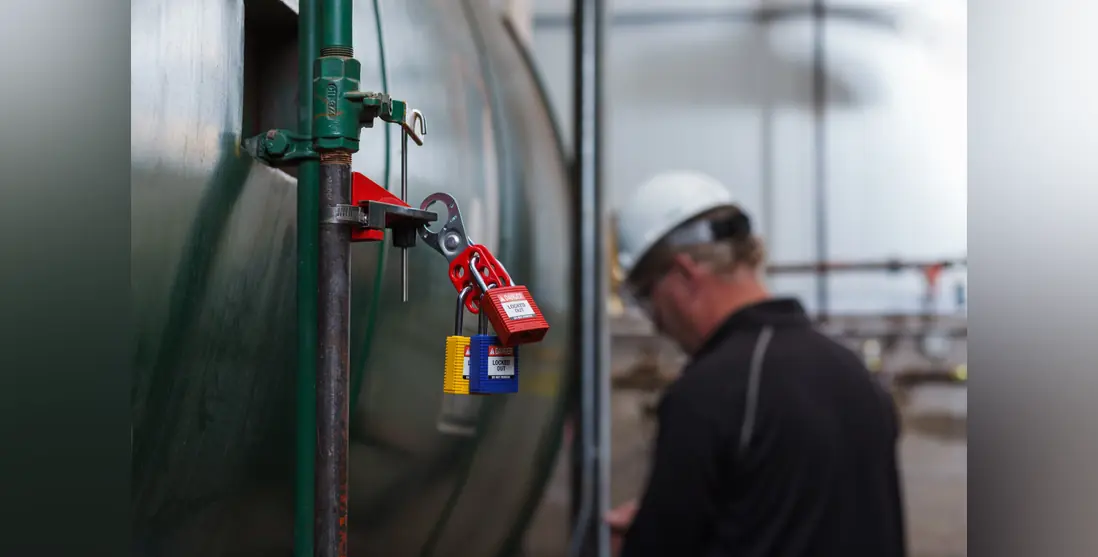
The European Norm (EN) 17975 offers a task-based framework to address 'grey zone' risks during machine and pipeline interventions, enhancing the efficiency of Lockout/Tagout programmes.
Data from the European Agency for Safety and Health at Work indicates that 10% to 15% of fatal industrial accidents in Europe stem from maintenance operations. These often result from underestimating risks during minor tasks like sensor adjustment, quick cleaning, or machine greasing. Because these are not always classified as maintenance, they remain outside traditional Lockout/Tagout protocols despite the inherent dangers.
Shifting to Task-Based Isolation
EN 17975 introduces a task-based risk approach to combat these hazards. Mustafa Ekseri, EMEA Safety Engineer at Brady Corporation, explains the operational advantages:
“Not having to halt an entire production line for every intervention can save valuable time - if it is possible in a safe way. To achieve this, EN 17975 proposes a layered approach based on risks related to specific tasks on specific machines and pipes. These risks are to be highlighted in a risk analysis. In absence of a risk analysis, machine zero energy states remain the safety standard. In that sense, EN 17975 builds on ISO 14118 by providing more options for compliance with European workplace safety legislation. Impacted activities can be defined using EN 17007 and EN 13306 and are also listed in EN 17975.”
Structuring Robust Risk Assessments
Identifying specific intervention risks requires rigorous assessment frameworks. Existing standards, such as ISO 12100 for machinebuilders and ISO 31000 for general risk management, serve as vital navigational tools. Ekseri highlights the thoroughness required:
“EN 17975 proposes 6 steps to analyse the risk in any machine intervention task, starting with the identification of the task, all the way to a feedback loop for continuous improvement. That includes a thorough energy source inventory and identification. The standard also requires a risk analysis update before applying Standard Operating Procedures, and during maintenance activities. In addition, EN 17975 advocates clearly identified degraded situations that may deviate from the standard risk assessment.”
The European Norm categorises four risk control processes, building upon the French norm X60-400:
-
Neutralisation: Equipment shuts down through control system design to allow safe task execution.
-
Standard isolation: All energies and fluids are locked out using an isolating device.
-
Reinforced isolation: Energies are removed via separation or combined isolating and opening devices.
-
Specific provisions: Measures allow diagnostics and observation safely while active energies remain present.
Establishing these processes demands meticulous documentation. Ekseri notes, "All 4 risk control processes require an inventory of energies and fluids per machine with their effects on people, property and the environment, a mapping of the isolating devices and an identification sheet of energies, fluids, components and lockout devices."
These isolations follow a nine-step procedure encompassing energy separation, lockout, tagout, and dispersion. Ensuring security involves rigorous testing. Ekseri adds:
“The ‘check’ step in EN17975 is already widely known in the industry as the ‘Tryout’ in Lockout/Tagout/Tryout or LoToTo. It is a vital step to help make sure that measures are implemented correctly and that they are still effective.”
Upgrading Safety Standards
While EN 17975 is not legally mandated, it heavily influences best practices.
“The standard however considerably facilitates compliance with EU workplace safety legislation. It sets a clear expectation for any machine intervention: if no risk analysis for the task is available, a machine zero energy state is required.”
Rethinking traditional safety assumptions is vital. Ekseri cautions against over-reliance on technology without proper assessment:
“Some forms of automated safety may not be sufficient for every task without an underlying risk analysis. Take a safety cage for example, equipped with sensors that deactivate moving machine parts the moment someone enters the cage. Do these nullify any residual energy that may pose a risk? Is gravitational, and other potential energy taken into account? The goal of EN 17975 is to prevent accidents, and to avoid a false sense of safety that does not provide any real protection.”