
Suresh Kumar, director of Dubai-based ITAC Safety, discusses the company’s innovative approach to safety training and how it is helping organisations maintain high health and safety standards
ITAC Safety provides internationally-accredited professional training, inspection and certification on Occupational Health, Safety and Environment, equipping workers with the knowledge and skills they need to stay safe on the job through customised visual impact training sessions, comprehensive safety programmes, and the integration of advanced technologies such as Virtual Reality (VR) into its training modules.
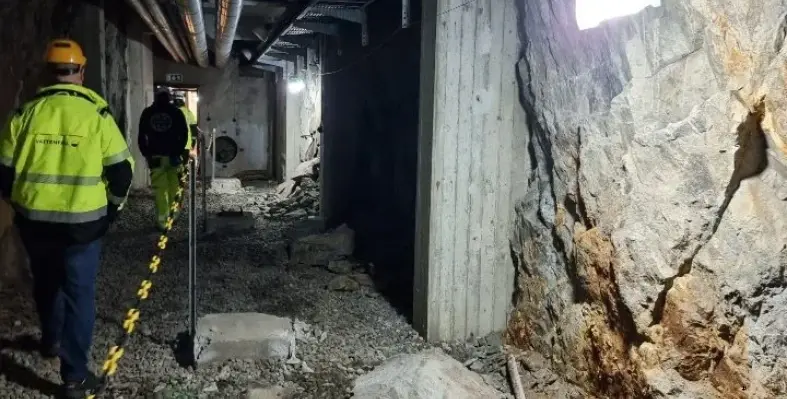
Visual impact training sessions bring safety training to life by offering visual and practical demonstrations across various worksites. These demonstrations showcase potential dangers and engage participants with realistic scenarios they might face on the job, helping workers internalise safety protocols more effectively than traditional lecture-based training. VR offers an immersive experience that allows workers to simulate real-life scenarios in a controlled environment, providing a safe space for workers to practise responding to hazardous situations without the risk of harm.
The company has also recently introduced its e-learning platform, designed to make safety training more accessible, flexible and interactive.
HSE Review: Since introducing Visual Impact Training (VIT) and digital learning programmes, what measurable improvements have you observed in workers’ safety awareness and accident prevention at workplaces?
Suresh Kumar: It has been a remarkable experience, and providing the VIT to one of our clients in Dubai has achieved the milestone of reducing LTI by more than one million man hours. Additionally, we are providing the digital platform to provide access regularly to our subscribed clients and create continual awareness, not just at the time of certificate expiry.
HSE Review: As technologies such as artificial intelligence (AI), virtual reality (VR), and digital simulations continue to evolve, how do you see them transforming health, safety, and environment (HSE) training in the UAE over the next five years?
Suresh Kumar: I am sure that AI and VR along with digital simulations will occupy more space in the training and HSE observation field, which is contributing to HSE success. However, cost is a challenge which distributors need to look into.
HSE Review: What are the biggest challenges UAE companies face in maintaining effective HSE standards, and how does ITAC Safety help organisations overcome them?
Suresh Kumar: Challenges arise through multiple factors such as budget, project deadline, unexpected delays, knowledge, competency and awareness about the requirements. However, the solution is always from the top management to initiate strategically and cascaded down towards the culture development as a long term stronger solution. Behaviour-based safety programme initiatives will be an effective long-term solution.
HSE Review: Beyond providing training and certifications, how does ITAC Safety encourage workers and employers to develop a proactive safety culture where potential hazards are identified and addressed before accidents occur?
Suresh Kumar: We offer support for CPD programmes and provide a free consultation / clarifications about legal awareness. We provide constant guidance on compliance requirements to be fulfilled from the initial meeting itself and cost benefit analysis, along with the responsibilities for both workers and employers to achieve the objectives and targets.
HSE Review: With the UAE placing increasing emphasis on sustainability and environmental responsibility, how is ITAC Safety adapting its training programmes to address emerging HSE requirements, and what are the company's key priorities for the coming years?
Suresh Kumar: We have become almost 75% paperless in our training and certifications and will reach 100% on or before the year 2028. We have created an e-learning platform which is in process and will further support our journey towards sustainability and environmental responsibility.
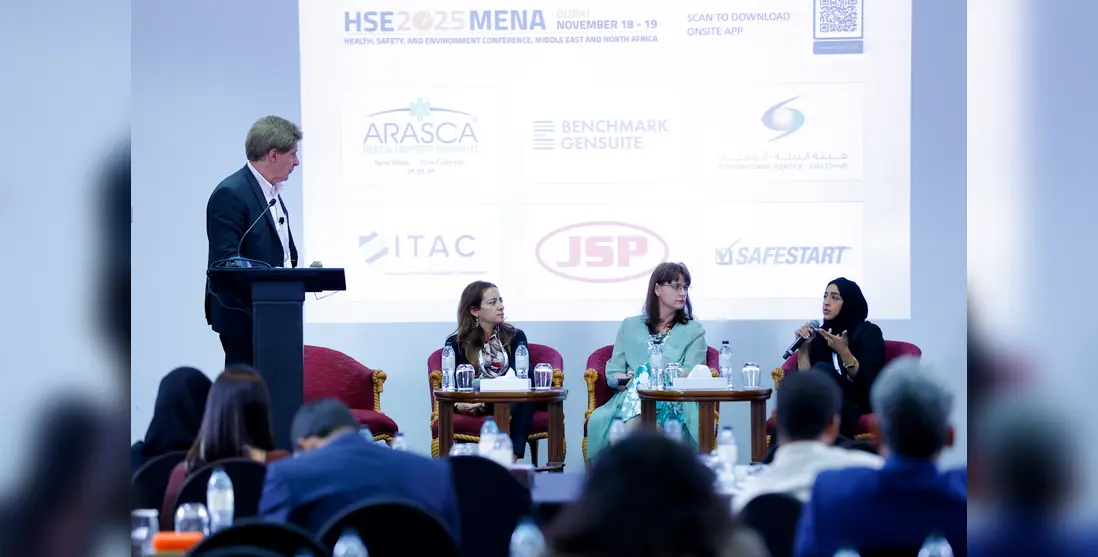
HSE Review: As a sponsor of the HSE MENA Conference, what do you hope attendees will take away from engaging with your team?
Suresh Kumar: Firstly we strongly encourage participants to think about going paperless for sustainability. It is not necessary to print the certificates as the QR code is available for verification. This will reduce costs as well.
Secondly, learning never ends. A training budget is an important requirement to enable your team to update their skills / refresh and develop their competencies. Do not forget to do the Training Needs Analysis and update your Organisational Training Matrix.