Fire safety standards have evolved significantly in recent years. Now there is a greater awareness of risk, stronger guidance in place, and increased emphasis on the responsibilities that sit with those managing buildings and workplaces. However, despite the progress, many common safety mistakes are often repeated time and time again, says Triton Security, which makes the case for treating fire safety as a living process
1. Treating fire safety as a paperwork exercise
One of the biggest misconceptions is that a completed fire risk assessment means the job is also completed. A fire risk assessment is only effective if it truly reflects the current condition and use of the building. Layouts can change without notice, staff members fluctuate, business aims change, and new equipment can be introduced, and bring new risks with it. Your risk assessment may have been accurate a year ago, but doesn’t reflect the risks that employees and visitors face today.
Fire safety should be treated as an ongoing process, rather than a document that is completed and filed away.
2. Escape routes are an afterthought
Fire exits and escape routes are one of the most fundamental aspects of fire safety, yet they can easily become compromised during normal day-to-day operations. Stock, furniture, deliveries, equipment and other items can gradually find their way into corridors and near exits; what begins as a temporary obstruction can quickly become part of the working environment.
It is important for those in charge of fire safety to regularly check that escape routes remain clear, accessible and appropriate for the number of people using the premises.
3. Not maintaining safety equipment
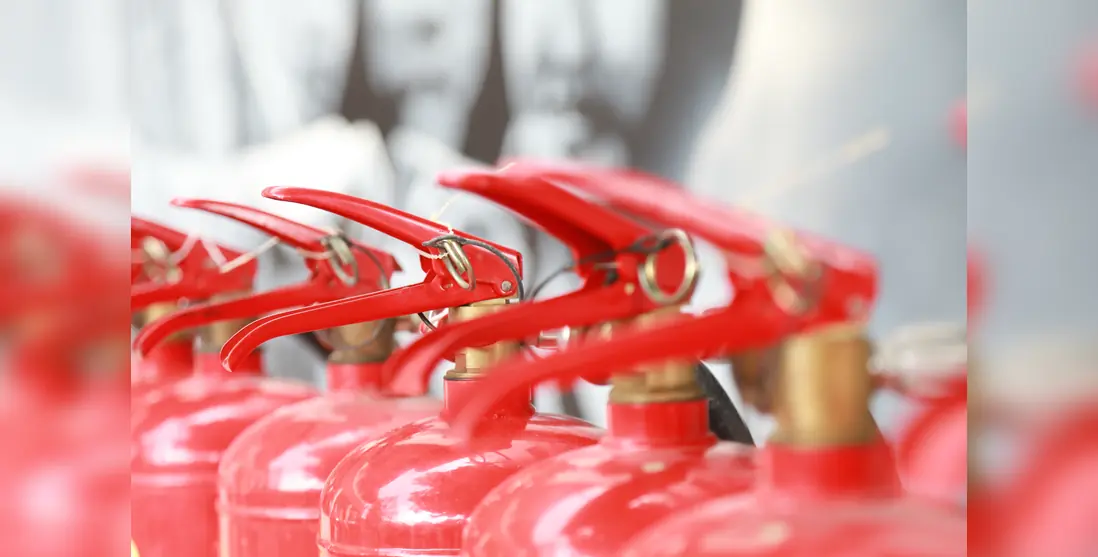
Installing fire alarms, extinguishers and other equipment is only the first step. But businesses often focus a little too heavily on whether equipment is present and visible, rather than whether it is operational and fit for purpose.
Equipment needs to not only be installed, but also appropriately positioned, accessible at all times, and regularly tested and maintained. A fire alarm that has not been properly maintained or an extinguisher that is inaccessible when it is needed provides a false sense of security - it’s no good should an emergency actually occur. Fire safety equipment should form part of a wider programme of inspection and maintenance, with responsibilities clearly understood by those managing the premises.
4. Assuming employee knowledge
A fire evacuation plan is only useful if people understand it.
You may have the clearest procedures in place, but if your staff is still unsure about where they should go, where responsibilities lie, or what they should do if they discover a fire, then those procedures are rendered useless.
This becomes even more important if you experience high staff turnover, have temporary workers or contractors in the building regularly, or different shift patterns - where the individual fire safety needs may vary depending on the time of day.
Fire safety awareness needs to be reinforced regularly; it should never be assumed that someone who has been shown the evacuation procedure once will automatically remember it months or years later.
5. Overlooking workplace changes
New machinery, electrical equipment, storage areas, building alterations, increased occupancy and changes in how a space is used can all affect the fire risk. This is one reason why fire safety should be considered whenever there is a significant change to a premises, rather than waiting until the next scheduled review. The question businesses should be asking is simple: has anything changed that could affect how a fire starts, spreads or how people escape?
6. Focusing on obvious risks over everyday ones
Fire safety conversations often focus on dramatic scenarios, but some of the most important risks are much more mundane. Overloaded electrical equipment, poor housekeeping, combustible materials being stored incorrectly or equipment being left in unsuitable locations may not appear particularly concerning in isolation. Collectively, however, they can create unnecessary risk.
Effective fire safety requires businesses to consider how ordinary working practices could contribute to a fire.
7. Failure to learn and adapt
One of the biggest opportunities for improvement is also one of the most frequently overlooked: learning from what has already gone wrong. A minor incident, near miss or identified issue - which can always occur no matter how careful you are - should prompt businesses to ask why it happened and whether the same conditions exist elsewhere.
The purpose of fire safety is not simply to pass an inspection; it is to reduce the likelihood of a fire occurring and ensure people can respond effectively if one does. Every incident or identified weakness provides an opportunity to strengthen the overall safety culture.
8. Assuming compliance = safety
Perhaps the most important distinction businesses need to make is between compliance and genuine fire safety. Meeting regulatory requirements is essential, but compliance should be viewed as the baseline rather than the end goal.
Having a strong fire safety culture in place means people understand their responsibilities, risks are actively managed and issues are addressed before they become serious problems.
The businesses with the strongest approach to fire safety are not necessarily those that simply have the most comprehensive documentation. They are the ones where fire safety is considered part of everyday operations.
Why fire safety needs to remain a living process
Fire safety needs to remain a living process. Regular reviews, effective maintenance, clear responsibilities and a culture where employees feel comfortable raising concerns can all help businesses move beyond a tick-box approach.
But the ultimate measure of effective fire safety is not whether a business has a folder full of policies; it’s whether those policies translate into safer buildings, better-prepared employees and a workplace where risks are identified and addressed before they have the opportunity to become something much more serious.
Effective fire safety is about much more than paperwork and equipment; it relies on businesses identifying risks, maintaining standards and ensuring fire safety is ingrained within the day-to-day culture. It needs to be part of the way a business operates every day.