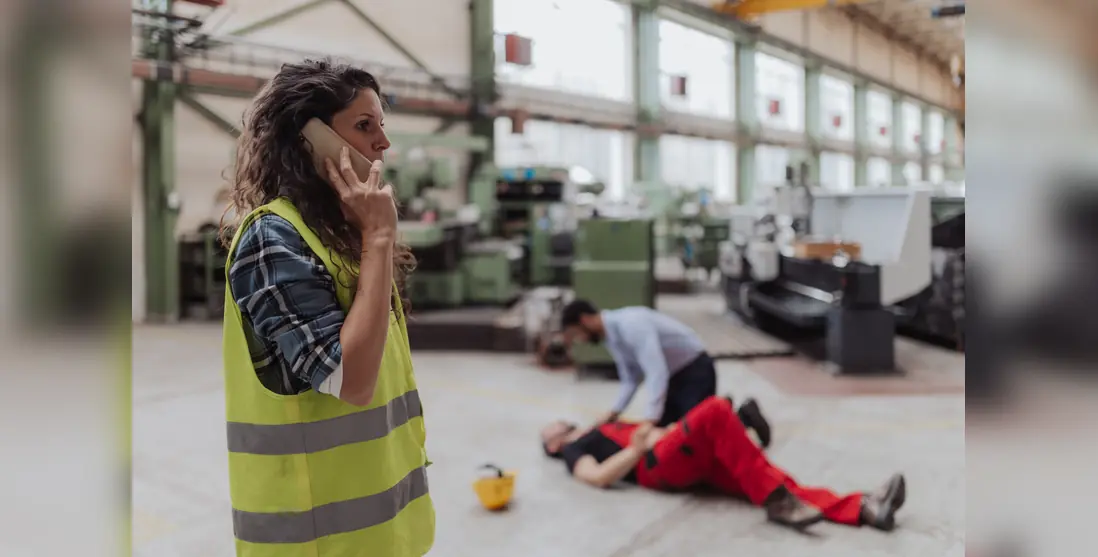
Every worker should be able to return home from work safe – but around the world, around 395mn people suffer work-related injuries, with workers in low-income countries more than twice as likely to experience serious workplace harm as those in wealthier nations
That’s according to a new report from safety charity the Royal Society for the Prevention of Accidents RoSPA) with funding from Lloyd’s Register Foundation, entitled Danger on the job: How global inequality shapes workplace harm”. It suggests that national wealth is the single strongest predictor of whether workers are injured or fear for their safety at work, outweighing individual factors such as income, education or gender.
In addition, occupational injuries and illnesses account for an estimated 6% of global GDP losses, according to the report, which highlights the fact that if injury rates in lower-income countries matched those seen in wealthier nations, up to two million lives could be saved and more than US$750bn in economic losses avoided annually.
Stark differences in workplace injury rates
Drawing on data from the Lloyd’s Register Foundation World Risk Poll 2023, RoSPA’s research reveals stark differences in rates of workplace harm across the World Health Organization’s (WHO) six global regions, demonstrating that as national wealth increases, the level of harm is significantly reduced:
- Western Pacific: 37% of workers (more than one in three) have experienced workplace harm or know someone who has in the last two years
- Africa: 31%
- South-East Asia: 30%
- Eastern Mediterranean: 22%
- Americas: 21%
- Europe: 21%
The report also highlights continuing weaknesses in occupational safety provision worldwide. More than six in 10 workers globally have never received occupational safety and health training, and fewer than half of International Labour Organization member states have an up-to-date occupational safety and health policy.
RoSPA believes many of the disparities could be explained by the greater prevalence of informal work in more dangerous sectors such as agriculture and mining in poorer nations, and more investment in health and safety systems in richer countries. The cost of safe work is off shored to poorer nations who do not have the safety infrastructure and legal protections of wealthier nations.
For some workers, unsafe conditions are compounded by limited bargaining power, informal employment, weak regulation, poor enforcement, or a lack of access to safety information and equipment. Workplace harm is not distributed evenly, and the people most exposed to risk are often those with the fewest resources to prevent, challenge or recover from accidents.
Recommendations
As part of a coordinated international effort to tackle workplace harm and inequality and ensure every worker can return home safely at the end of the day, RoSPA is calling for:
- stronger occupational safety systems
- improved reporting and data collection
- accountable global supply chains, and
- expanded protections for informal workers.
Becky Hickman, chief executive officer, RoSPA said, "Every worker, regardless of where they live, deserves the right to return home safe and healthy at the end of the day. These findings demonstrate that workplace safety is not simply a matter of individual behaviour or personal circumstances. Strong national systems, effective regulation and investment in occupational safety and health are critical in reducing harm and protecting workers."
Nancy Hey OBE, director of evidence and Insight, Lloyd’s Register Foundation Global Safety Evidence Centre said, “The finding that it is national wealth – rather than any individual circumstances or behaviours – that currently presents the hardest ceiling to improved workplace safety, is a compelling and important one. In lower income countries, demographic factors that might otherwise be protective hold little sway. This reinforces the importance of fundamental systemic, structural and regulatory improvements, as well as established safety leadership and governance, in reducing the global burden of workplace harm.”