Industrial Insights
Industrial Insights

- Details
- shivani dhruv
- Industrial Insights

The Umm Al Houl desalination plant in Qatar has reached a significant safety milestone, recording two million man-hours worked without a Lost Time Incident (LTI) at the Umm Al Houl Integrated Water and Power Project (UHP IWPP)
This achievement highlights the strong safety culture maintained by all employees and site supervisors, underpinned by strict adherence to Health, Safety, and Environment (HSE) protocols, proactive hazard identification, and consistent application of safe work practices across the site.
While celebrating this accomplishment, the project team continues to emphasize safety as a core operational value and a collective responsibility throughout the lifecycle of the facility.
The Umm Al Houl plant is a critical component of Qatar’s energy and water infrastructure. As part of the Umm Al Houl integrated water and power complex, the facility contributes roughly 30% of the country’s electricity and 40% of potable water supply. Operational since 2021, the desalination plant produces 564 million liters of drinking water per day, making it Qatar’s largest reverse osmosis-based desalination facility. The plant provides potable water to approximately 1.1 million people, reinforcing the nation’s water security.
ACCIONA was responsible for the design, procurement, construction, and commissioning of the Umm Al Houl plant and continues to manage its operation and maintenance (O&M). Through these activities, ACCIONA oversees the production of 48% of Qatar’s fresh water, leveraging reverse osmosis technology, widely regarded as the most sustainable method for seawater desalination.
This milestone further demonstrates ACCIONA’s ongoing commitment to safety, sustainability, and operational excellence in the development and management of large-scale water infrastructure projects worldwide.
- Details
- Sania Aziz
- Industrial Insights
The rapid rollout of smart cities, mega developments and digitally enabled infrastructure across the Middle East is creating a new challenge for governments and developers alike: security gaps that often emerge at the handover stage, when responsibility shifts from construction to operations.
As buildings become more connected and complex, ensuring consistent, scalable and cloud-ready physical security is increasingly critical.
Against this backdrop, AI-powered physical security specialist Verkada has announced its expansion into the Middle East, establishing a Dubai-based office and appointing Fred Crehan as Head of Middle East. The move reflects growing regional demand for modern, cloud-based security platforms that can support smart infrastructure throughout its lifecycle, from construction and commissioning through to long-term operations.
“The Middle East is experiencing rapid urban development, large-scale infrastructure projects, and a strong focus on security and innovation,” said Eric Salava, Chief Revenue Officer at Verkada. “Verkada’s cloud-based platform aligns well with the region’s ambitions, and Fred’s deep understanding of the local landscape and proven track record of scaling high-growth businesses make him the ideal leader to bring our integrated platform to market.”
Crehan brings more than 25 years of enterprise technology experience and was most recently with Confluent, where he led the launch of its Dubai office and built a regional partner ecosystem. In his new role, he will focus on supporting organisations grappling with the operational realities of smart buildings, particularly where legacy security systems struggle to keep pace with digital transformation.
"Safety is a top priority in the Middle East, driven by a commitment to world-class tourism and the rapid development of new urban centers," said Fred Crehan, Head of Middle East at Verkada. "As cloud adoption continues to accelerate, many organizations are looking for modern solutions that can help them overcome traditional resource constraints. Verkada’s platform is uniquely positioned to support government, hospitality, retail, and logistics providers, as well as the large-scale construction and real estate sectors."
While Verkada already serves global customers with operations in the Middle East, the Dubai office marks its first dedicated regional presence. The company plans to expand its local team, with initial hires focused on sales engineering and leadership, as it deepens engagement with regional partners and end users.
Verkada’s Middle East expansion builds on strong international momentum following a recent investment from CapitalG, Alphabet’s independent growth fund, which valued the company at $5.8bn. The funding is intended to accelerate AI innovation and support its growing base of more than 30,000 customers worldwide.
As smart infrastructure continues to reshape the region’s urban landscape, Verkada is positioning its cloud-based security platform as a way to close critical gaps at handover and beyond, helping operators manage increasingly complex, connected environments with greater visibility and control.
- Details
- Sania Aziz
- Industrial Insights
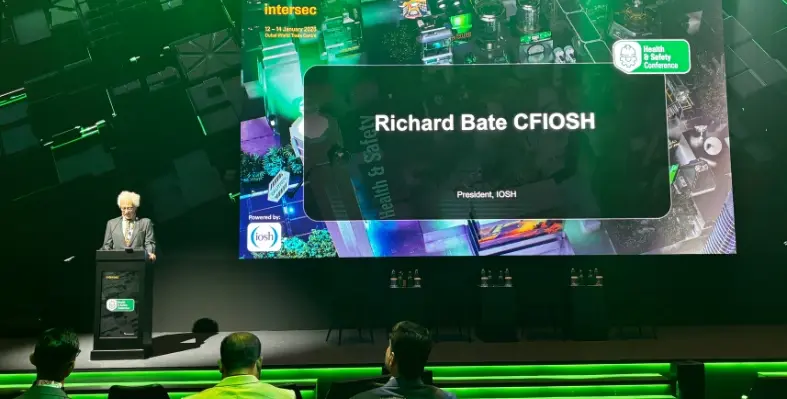
Richard Bate, President of the Institution of Occupational Safety and Health (IOSH), opened Intersec 2026 with a rousing keynote that spotlighted both the long-standing legacy and the evolving challenges of workplace safety in a turbulent world.
Addressing delegates from around the globe, Bate traced the remarkable growth of IOSH since its founding in 1945 to its current status as the world’s largest professional health and safety membership body. “We now have more than 50,000 members in 130 countries. We’re safety professionals, health practitioners, risk managers, educators and advocates united by a common purpose,” Bate proclaimed, signalling the breadth and unity of the profession.
Bate did not shy away from sobering statistics, noting that nearly 3 million workers die each year globally from occupational accidents and work-related diseases, according to the International Labour Organization. He pointed out that “behind each statistic is family, a community, and that impact ripples outwards”, demonstrating the far-reaching consequences of lapses in occupational safety and health (OSH).
Much of Bate’s address looked forward, urging OSH professionals to adapt to forces rapidly reshaping the world of work.
He highlighted the accelerating influence of artificial intelligence and automation, referencing predictions that up to 81% of tasks may soon be automatable, and he drew attention to mounting climate-related risks, “100,000 heat-related deaths per year are now caused by climate change,” he noted, emphasising the expanding remit of OSH professionals into environmental sustainability and resilience.
Bate called for more than just good intentions, insisting on a “global shift in how we approach harm reduction”. He underscored that robust safety cultures are not merely a compliance obligation, but both a moral imperative and business advantage, as companies investing in safety see reduced incidents, enhanced engagement and stronger reputations.
He concluded by challenging the profession not to rest on its laurels but to seize the moment for transformation: “What got us to where we are won’t get us to where we need to be in the future.” As digital risks, climate hazards and evolving models of work intensify, Bate’s vision is clear—OSH professionals must lead the charge in safeguarding workers’ well-being, today and tomorrow.

- Details
- shivani dhruv
- Industrial Insights
Avetta, a global provider of supply chain risk management software, has launched Avetta University, a new learning resource embedded within its AI-powered Avetta One platform
The initiative is designed to deliver essential health and safety e-training for suppliers and contractors, helping hiring companies ensure every part of their supply chain is fully prepared for work.
Health and safety training plays a critical role in risk management by supporting safe and consistent job execution. Despite this, nearly one in four organisations acknowledge that they do not provide sufficient training to suppliers and contractors, even though more than half say they would like to do so.
Avetta University addresses this gap by offering a carefully curated library of training courses. Hiring clients can select relevant courses and require suppliers and contractors to complete them before starting work. At the same time, suppliers and contractors can independently enrol in courses, gaining certificates that strengthen their credentials and competitiveness. Because the learning platform is fully integrated into Avetta One, training records and certificates are easily accessed and managed alongside other platform features.
“We’re committed to helping every company make health and safety a top priority, particularly suppliers and contractors who need flexible, accessible training that fits how they work,” said Abid Yousuf, Chief Customer Officer at Avetta.
“With Avetta University, we're making it seamless to improve health and safety performance across entire supply chains with training that’s as easy to deploy and participate in as it is essential.”
The course catalogue combines content from leading external providers with short, targeted learning modules developed by Avetta’s instructional design team and subject matter experts from its Risk Advisory practice. Training covers areas such as strengthening health and safety systems, improving compliance, reducing serious injuries and fatalities, and building effective safety leadership and culture. Frontline topics include chemical, electrical and mechanical safety, environmental awareness, emergency planning, first aid, and working safely at height. The library will continue to expand in response to customer needs, industry developments, updated safety data and user feedback.
“At Black Hills Energy, we’re raising the bar for supplier and contractor readiness,” said Jamie Huntington, Supplier Diversity and Development Manager at Black Hills Energy. “Through Avetta University, we deliver essential training upfront ensuring every supplier and contractor is prepared and aligned with our standards. This approach improves communication, enhances safety and builds confidence in the quality of our partnerships.”
Alongside Avetta University, the company also offers Job Ready Pathways, which provide practical guidance to help organisations identify the appropriate safety training for specific high-risk roles and activities. Available through Avetta’s member benefits resources, these pathways align job tasks with recommended training to support consistent onboarding and stronger safety performance.
Avetta further enhances its offering through partnerships with recognised industry organisations, including the American Society of Safety Professionals and the National Safety Council. These collaborations provide customers with access to discounted professional memberships, instructor-led courses and recognised certifications. Together, Avetta University, Job Ready Pathways and these partnerships create an integrated ecosystem that supports workforce readiness and long-term safety performance across global supply chains.
- Details
- Sania Aziz
- Industrial Insights
As the UAE accelerates its national sustainability agenda, climate action is shifting from voluntary pledges to formal regulatory expectation. Federal Decree-Law No. 11 of 2024 on the Reduction of the Effects of Climate Change marks a turning point, introducing enforceable obligations around emissions management, alongside administrative penalties for non-compliance.
While the finer details of implementation and reporting pathways are still evolving, the direction of travel is clear.
Organisations are now expected to show real progress in measuring, managing, and governing their climate impact.
For many businesses, this represents more than a compliance update. It is a signal that sustainability data is moving into the same category as financial data, something boards and executives must understand, trust, and use to make decisions.
Against this backdrop, companies across sectors, from industry and real estate to logistics, finance, and investment, are reassessing how ESG data is generated and validated. We spoke with Jomy Joseph, Director at CoralDune Partners and former Regional Director for UL Solutions in the Middle East and Africa, about what Decree 11 means in practice and how organisations can respond without turning sustainability into a box-ticking exercise.
According to Joseph, adoption of the new law is already under way, but not in a uniform manner. “What I see on the ground is a phased adoption, rather than a single switch being flipped,” he says. Large groups, particularly those with international investors, lenders, or global customers, are leading the way. Many have been reporting emissions in some form for years, and Decree 11 is pushing them to tighten governance, improve data quality, and clarify accountability.
Assessing supply chains
The next wave, he explains, will come through supply chains. Contractors, manufacturers, logistics providers, and service companies are increasingly being asked to provide credible emissions data by customers who are themselves responding to regulatory and investor pressure.
For the mid-market, awareness is still uneven, but Joseph expects that to change quickly. “The UAE has made it clear through its Net Zero 2050 commitment and wider sustainability agenda that climate action is no longer optional. Decree 11 turns that ambition into a structured expectation.”
While the law allows for significant financial penalties, ranging from AED 50,000 up to AED 2,000,000 and rising for repeated violations, Joseph believes the earliest impacts will often be commercial rather than regulatory.
Companies may find themselves excluded from tenders where sustainability disclosure is part of the qualification process, subject to greater scrutiny from banks and insurers, or exposed to reputational risk if their figures cannot be supported with evidence. “Even before enforcement is felt directly, the market itself is already moving in the same direction as the regulation,” he notes.
The UAE has supported initiatives to reduce emissions over the decades
At CoralDune Partners, Joseph and his team focus on helping boards and CEOs embed ESG reporting as a core governance and performance management function. Drawing on his background in testing, inspection, certification, and enterprise sustainability, he stresses that effective ESG reporting is not a marketing exercise. Instead, it starts with clarity around what actually matters for a specific business, sector, and geography.
That means defining a measurable baseline, agreeing on calculation methods, and ensuring consistency year on year. It also requires clear ownership, internal controls, and audit trails, so that reporting is defensible and repeatable.
Crucially, it involves building a practical roadmap that links emissions reduction to real operational levers, such as energy use, procurement, logistics, product design, and buildings. For mid-sized companies, the challenge is doing this without unnecessary complexity. “The goal is not to copy large enterprise reporting, but to build a credible, scalable foundation that leadership can rely on,” Joseph says.
Technology, and particularly AI, has a growing role to play. While spreadsheets remain familiar tools, Joseph argues they were never designed to support long-term, regulated reporting under investor scrutiny. AI can help automate data capture from invoices, fuel logs, utility bills, and ERP systems, classify it correctly, and flag anomalies before numbers reach management.
It also enables faster scenario planning, allowing companies to see how changes in suppliers, equipment, or logistics routes affect both emissions and cost. “The real issue is not the tool, but the outcome,” he says. “Can the organisation produce numbers that are consistent year after year, backed by evidence, and ready to be checked?”
Importantly, Decree 11 does not only apply to large enterprises. The focus is on activities and emissions sources, not company size. Smaller businesses and startups should not assume they are automatically out of scope.
For them, compliance does not mean producing lengthy reports. A basic emissions baseline, clear calculation records, and a short list of practical actions that reduce both cost and emissions are often enough to start. Many will first feel the impact through customer and supply chain requirements. Being prepared early puts them in a far stronger position.
Challenges ahead
One of the biggest issues Joseph sees is trust in the data itself. Many organisations can produce a sustainability statement, but far fewer can clearly explain where the numbers came from and whether the same approach will be used next year. This is where ESG reporting becomes a board-level issue, as weak data translates directly into regulatory, commercial, and reputational risk.
To reduce greenwashing risk, Joseph points to the importance of moving from claims to evidence and assurance. Structured measurement, reporting, and verification processes, independent assurance under standards such as ISO 14064-3, product-level tools like life cycle assessments and environmental product declarations, and recognised built environment frameworks all help convert intent into measurable performance. “If a claim cannot be supported with data and documentation, it should not be made,” he says.
Globally, Joseph sees useful benchmarks in the European Union’s focus on structure and comparability, Singapore’s practical and business-friendly approach, and the UK’s emphasis on transition planning. The UAE, he believes, has the advantage of speed. With strong digital government infrastructure and clear national targets, it has the potential to move rapidly from policy to execution.
Ultimately, credible ESG reporting is becoming inseparable from competitiveness. As sustainability data increasingly shapes access to capital, insurance, and investment, Decree 11 is not just about compliance. It is about how companies position themselves for the next phase of growth in a low-carbon economy.

- Details
- Sania Aziz
- Industrial Insights
Deliveroo Qatar has launched the second edition of its Cautious Rider Award, underlining the company’s ongoing commitment to road safety and its dedication to recognising riders who consistently prioritise responsible, safety-first behaviour on the roads.
This year, a selected group of Deliveroo riders in Qatar were honoured for their exemplary safety records. The recognised riders received financial incentives and official certificates of appreciation in recognition of their consistent adherence to traffic regulations and high safety standards throughout the year.
The Cautious Rider Award forms a key part of Deliveroo’s broader rider well-being strategy, which aims to foster a culture of safety across the rider community. Riders are assessed against clearly defined, safety-led criteria, including compliance with traffic laws and responsible conduct while on the road. The programme is designed not only to reward excellence but also to encourage positive behaviour among all riders.
Commenting on the initiative, Yazan Aburaqabeh, Director of Operations at Deliveroo, said: “Road safety remains a top priority for Deliveroo. We continuously work closely with our riders, partners and relevant authorities to promote awareness, training and best practices. Through the Cautious Rider Award, we are proud to recognise riders who consistently uphold these standards and lead by example. By celebrating safe riding behaviour, we aim to contribute to a safer and more responsible delivery environment in Qatar.”
The award complements Deliveroo Qatar’s wider rider support and well-being programmes, which include ongoing road safety training, regulatory awareness sessions, and guidance on industry best practices. These initiatives are part of Deliveroo’s sustained efforts to create a safer, more supportive environment for riders while contributing to overall community safety.
Through the Cautious Rider Award and other initiatives, Deliveroo continues to reinforce its commitment to rider safety and responsible delivery practices. By highlighting the achievements of those who consistently demonstrate careful and law-abiding riding, the company aims to inspire all riders to adopt safe habits, ultimately enhancing safety across Qatar’s roads.
Deliveroo, founded in 2013 by William Shu and Greg Orlowski, is an award-winning delivery service operating with approximately 183,000 restaurant and grocery partners and around 135,000 riders worldwide. Headquartered in London, the company has a presence in nine markets, including Qatar, Belgium, France, Italy, Ireland, Singapore, the UAE, Kuwait, and the United Kingdom, delivering its mission to provide the best possible food delivery experience globally.
- Details
- Sania Aziz
- Industrial Insights
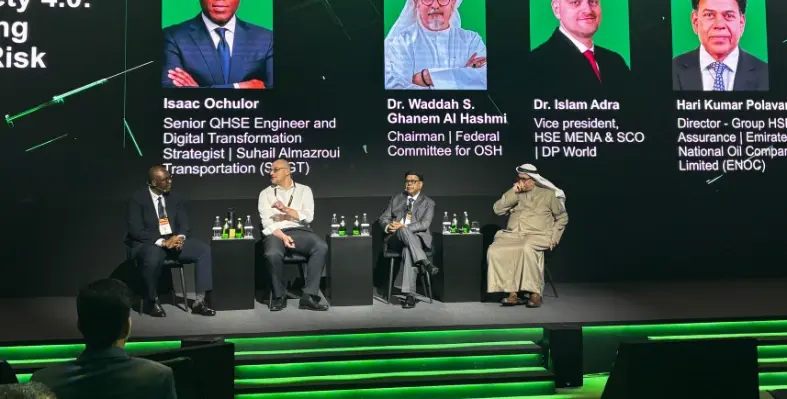
At Intersec 2026, a vital panel discussion on AI in safety and governance featured leading voices in engineering, safety, and digital transformation.
Moderated by Isaac Ochulor, Senior QHSSE Engineer and Digital Transformation Strategist, the panel brought together distinguished experts Dr. Waddah Ghanem, Dr. Islam Adra, and Hari Kumar Polavarapu to explore the rising impact of artificial intelligence on workplace safety, accountability, and organisational trust.
The session opened with Ochulor contextualising the meteoric rise of AI, noting, “What we started seeing in 2022…AI has completely been something that has touched base on every key dependency of businesses.” He emphasised AI’s rapid integration across sectors, referencing predictions that global AI spending would reach US$1.5 trillion.
Central to the conversation was the deployment of AI in high-risk environments, particularly oil and gas. Ochulor recounted real-world scenarios where AI successfully detected anomalies but raised a pivotal question: “When AI takes actions, who is responsible and who is accountable?” This query set the tone for deeper examination into responsibility frameworks.
Dr. Waddah Ghanem addressed the dilemmas faced by organisations, stressing, “We delegate responsibility, but we do not delegate accountability.” He clarified that employers and decision-makers ultimately bear responsibility for outcomes, regardless of how much autonomy is given to AI systems. “Anybody who engages in AI continues to carry the accountability,” Ghanem affirmed, even as AI takes on increasingly complex tasks.
The panel also delved into predictive analytics and risk management. Hari Kumar Polavarapu highlighted how AI-driven systems reduced manual inspections by 40% in some oil refineries, triggering discussions around the potential and limitations of predictive tools. However, he cautioned, “We are not there yet…We need to have certain checks and balances. Still, accountability has got to be defined clearly.”
Dr. Islam Adra shifted the conversation to trust and organisational culture, noting, “When you put trust and AI in the same sentence, it’s kind of an oxymoron.” He advocated for leadership transparency, worker involvement, and psychological safety as pillars for successful AI adoption. “Transparency can fill those gaps,” Adra said, emphasising the need for inclusive dialogue and clear communication around the rollout of AI.
As the discussion drew to a close, a live poll revealed persistent skepticism among the audience about fully entrusting critical safety functions to AI. The panel concluded that while AI is an indispensable tool, it cannot replace human accountability, judgement, or the ethical imperatives that underpin safe operations.
Through this candid, deeply insightful exchange, the Intersec 2026 panel underscored AI’s promise while reminding all stakeholders that technology, however advanced, is most effective when paired with responsible, transparent human leadership.

- Details
- Sania Aziz
- Industrial Insights
Boeing will return to the Doha International Maritime Defense Exhibition and Conference (DIMDEX) from 19-22 January at the Qatar National Convention Centre, where it will showcase its advanced defence capabilities and integrated solutions for air, land and maritime operations.
The company’s participation reflects its longstanding partnership with Qatar and its continued support of the Qatar Armed Forces, alongside a growing local footprint. Boeing currently employs more than 340 people in Qatar and continues to invest in local capability development through Boeing Aerospace Doha LLC. These efforts focus on research, innovation and workforce development in line with Qatar National Vision 2030.
“DIMDEX provides an important opportunity for Boeing to engage with our customers and partners in Qatar and across the region,” said Vince Logsdon, vice president of Global Business Development & Strategic Marketing at Boeing Defense, Space & Security. “We are proud of our long-standing partnership with the Qatar Armed Forces and our continued commitment to supporting mission readiness through advanced platforms, integrated services and a strong local presence.”
At DIMDEX, Boeing will highlight a range of defence platforms and capabilities designed to address evolving operational requirements. These include the F-15EX multirole fighter, offering advanced avionics, increased payload capacity and enhanced mission flexibility; the KC-46A Pegasus, described as the world’s most advanced multirole aerial refuelling aircraft; and the CH-47 Chinook, a modernised heavy-lift helicopter featuring a fully integrated digital cockpit and advanced cargo-handling systems. The company will also showcase Insitu uncrewed aircraft systems, including the ScanEagle family, which provide persistent intelligence, surveillance and reconnaissance with a small operational footprint.
Visitors to the Boeing stand will be able to experience a KC-46 Aerial Refueling Operator Station simulator, view an AH-64 Apache scale model and explore Boeing’s integrated defence portfolio through an interactive 3D cube totem table. An F-15EX simulator will also be featured at the Qatar Armed Forces stand, highlighting advanced fighter capabilities and training technologies.
Boeing will additionally present its Boeing Global Services offerings, spanning sustainment, training, digital aviation solutions, parts and distribution services, and performance-based logistics. These services are designed to improve aircraft availability, enhance mission readiness and reduce life-cycle costs. Last year, the F-15QA programme reached a milestone of 10,000 incident-free flight hours, with fleet availability exceeding contractual obligations.
For nearly two decades, Boeing has supported the Qatar Armed Forces with aircraft, training, maintenance and logistics services across key platforms, including the C-17 Globemaster III, AH-64 Apache and F-15QA, contributing to Qatar’s air, land and maritime security as well as humanitarian and coalition missions.

- Details
- Sania Aziz
- Industrial Insights
Sharjah Civil Defence Authority (SCDA) and the National Fire Protection Association (NFPA) have announced a strategic alliance aimed at strengthening fire and life safety across the Emirate of Sharjah. The partnership was formalised through the signing of a memorandum of understanding (MoU) during an official ceremony at Intersec Dubai 2026.
The MoU was signed by His Excellency Brigadier Yousif Obaid Al Shamsi, Director General of Sharjah Civil Defence Authority, and Jim Pauley, president and CEO at NFPA. The agreement sets out a framework for cooperation focused on enhancing education, training and safety standards for fire and life safety professionals in the Emirate.
Under the alliance, SCDA and NFPA will prioritise the development of comprehensive education and training programmes designed to strengthen fire and life safety systems across Sharjah. Drawing on NFPA’s global expertise, the collaboration will leverage its extensive training resources, recognised certification programmes and more than 300 fire codes and standards. The partnership will also utilise insights from the NFPA Fire & Life Safety Ecosystem™ to support the development and refinement of safety standards tailored to Sharjah’s specific needs.
“At Sharjah Civil Defence Authority, fire and life safety are paramount, and we remain committed to safeguarding the well-being of our people. By collaborating with NFPA, we aim to leverage their 130 years of expertise in managing fire and electrical risks, ensuring that fire safety professionals across Sharjah are equipped with the latest knowledge and tools in line with global standards. This alliance reflects our dedication to continuous improvement and proactive measures to protect lives and property,” said His Excellency Brigadier Yousif Obaid Al Shamsi.
Jim Pauley, president and CEO at NFPA, commented: “In the urban landscape, fire presents a constant threat, and with ongoing development across Sharjah, including numerous high-rise buildings, it is essential that robust fire and life safety systems are in place to protect the public. At NFPA, we look forward to working alongside the Sharjah Civil Defence Authority to enhance the training and education of fire and life safety professionals across the Emirate. Our aim is to strengthen awareness and implementation of relevant codes, standards, and regulations, supporting Sharjah’s efforts to align safety practices with global benchmarks.”
The collaboration comes as Sharjah steps up efforts to address fire safety risks, particularly in high-rise buildings. In 2024, under the directive of His Highness Dr. Sheikh Sultan bin Mohammed Al Qasimi, Supreme Council Member and Ruler of Sharjah, the Emirate launched a government-funded initiative valued at AED 100 million to replace hazardous cladding materials with fire-resistant alternatives.
The SCDA–NFPA alliance is expected to complement such initiatives by providing technical expertise and access to global best practices, reinforcing Sharjah’s commitment to proactive, standards-led improvements in fire and life safety.
- Details
- Louise Waters
- Industrial Insights
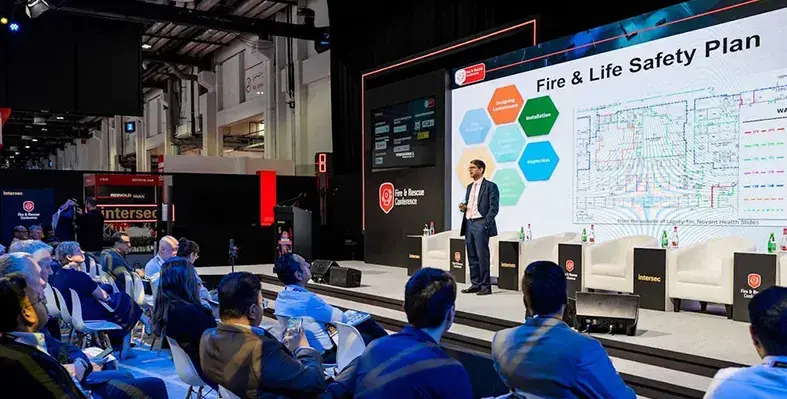
Intersec returns to the Dubai World Trade Centre from 12-14 January 2026, with the introduction of several new initiatives
They include the Passive Fire Day, the Control Room Innovation Theatre, and co-located event, FCIA–NFCA PFPCON ’26 Dubai.
Focus on passive fire sector
Hosted in collaboration with the Association for Passive Fire Protection (ASFP), the Passive Fire Day, which takes place on 14 January, has been designed to elevate the passive fire sector into a recognised professional discipline within the built environment. Passive fire protection refers to the built-in fire safety measures that continuously work to contain fire and smoke, protect escape routes, and maintain structural integrity. These include fire-resistant walls and floors, fire doors, fire stopping and cavity barriers.
Senior ASFP representatives and industry collaborators will lead presentations and panel discussions covering early engagement in design, regulatory alignment, best practice in fire door specification and installation, and the growing importance of competence across the passive fire supply chain.
Another new feature related to passive fire is the FCIA–NFCA PFPCON ’26 Dubai, taking place from 12–14 January 2026. Co-located with Intersec 2026, and presented by the Firestop Contractors International Association (FCIA) and the National Fireproofing Contractors Association (NFCA), the event connects global experts, innovators and practitioners to advance standards, competency and collaboration across the passive fire sector.
Dishan Isaac, show director of Intersec at Messe Frankfurt Middle East, said, “Passive fire protection underpins the safety of the built environment, yet it has historically been treated as a technical afterthought rather than a professional discipline. By integrating Passive Fire Day and PFPCON ’26 Dubai into Intersec, we are creating a platform that brings competency, standards and accountability into sharper focus, while encouraging earlier engagement and stronger collaboration across the entire construction and life-safety value chain.”
Control Room Innovation Theatre
Also launching at Intersec 2026 is the Control Room Innovation Theatre, delivered in partnership with the International Critical Control Rooms Alliance. Sessions will examine how cognitive control rooms are emerging, with AI and advanced data analytics enabling faster, more informed decision-making in high-pressure situations. Discussions will also explore the shift towards integrated command centre operations, highlighting how breaking down organisational and sector silos can deliver more coordinated, agile and effective responses to complex incidents.
A strong emphasis will be placed on the human dimension of control room performance, with sessions focused on operator wellbeing and the critical link between workforce empowerment, resilience and operational outcomes.
In addition to the new features, Intersec 2026 will launch a series of exclusive, invitation-only Executive Roundtables that bring together senior leaders from government, industry, and technology for focused, high-level dialogue on the most pressing challenges facing the security, safety, and fire protection sectors. They include Redefining Crisis Management for Critical Infrastructure Protection, delivered by PwC Middle East; Governing the Blue: Intelligence-led Security for Gulf Maritime Boundaries, and Defending the Digital Backbone: Securing National Infrastructure in the Era of AI and Hybrid Threats.
The forthcoming edition will also aunch the Innovation Trail, an interactive feature that spotlights exhibitors showcasing innovative products and solutions in the security, safety, and fire protection industry.
Intersec 2026, which benefits from the strategic support of the General Command of Dubai Civil Defense (DCD) and the Security Industry Regulatory Agency (SIRA), will host over 1,200 exhibitors from more than 60 countries across five core sectors: Homeland Security & Policing, Cybersecurity, Commercial & Perimeter Security, Fire & Rescue, and Health & Safety. More than 50,000 visitors are expected to attend.
- Details
- Sania Aziz
- Industrial Insights
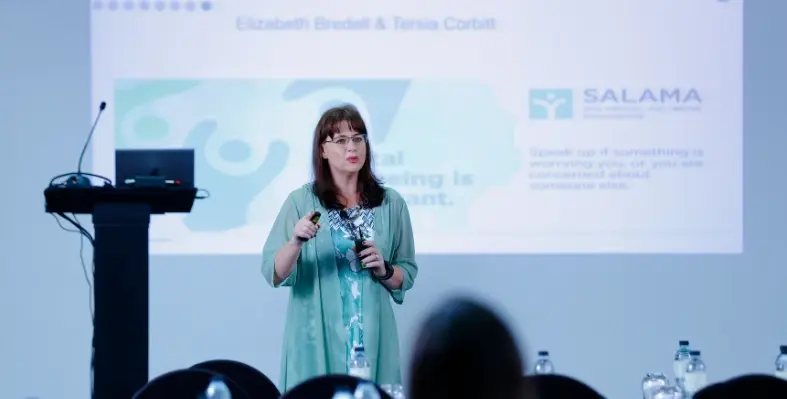
At Emirates Global Aluminium (EGA), occupational safety extends beyond operational protocols to a comprehensive commitment to mental wellbeing.
Under the leadership of Elizabeth Bredell and with the practical expertise of Tersia Corbett, the company has adopted a structured approach that demonstrates safety is as much about mental health as it is about the prevention of physical hazards.
EGA’s safety philosophy is shaped by Salama, its mental wellbeing programme. Managed within the safety department, rather than being limited to Human Resources, Salama is built upon proactive engagement, clear communication, and strong leadership involvement. What began as a campaign soon became a core cultural value, with the company reinforcing this through regular webinars, leader-led videos, and highly visible activities on site. By giving the initiative a name and promoting it openly, EGA has fostered genuine ownership and accountability at every level.
A key aspect of Salama is the presence of trained Mental Health First Aiders and mental health advocates throughout all operations. These individuals are not only prepared to provide support but also to recognise early signs of stress, particularly among those regularly exposed to high-risk working environments. EGA requires all safety superintendents and supervisors to complete Mental Health First Aid training, ensuring that a robust support system exists at every operational level. The initiative encourages open dialogue, reduces stigma, and empowers employees, including those who may be reluctant to come forward, to seek the help they need.
These efforts have yielded tangible results. Since Salama’s implementation, EGA has seen marked reductions in the Total Recordable Frequency Rate (TRFR) as well as lost time injuries, even as production demands have risen. The experience of the COVID-19 pandemic further demonstrated the importance of this approach, as increased leader visibility and direct engagement maintained both morale and safety performance during periods of heightened stress and fatigue.
Tersia Corbett highlighted the use of additional tools, such as the Flourish DX platform for surveying psychosocial risk, and described how data-driven interventions are designed to address issues within high-risk teams. EGA’s Employee Assistance Programme (EAP) and steady internal communication ensure that support remains accessible to all, including contractors.
Elizabeth’s experience following a serious workplace incident illustrated the significant legal responsibilities that safety professionals face. While she was confronted with the real possibility of imprisonment, the systems and training she helped establish provided not only protection for the workforce, but also critical accountability. In modern industry, occupational safety is closely linked to care for individuals, unwavering attention to risk, and a clear understanding of legal obligations.
- Details
- Sania Aziz
- Industrial Insights
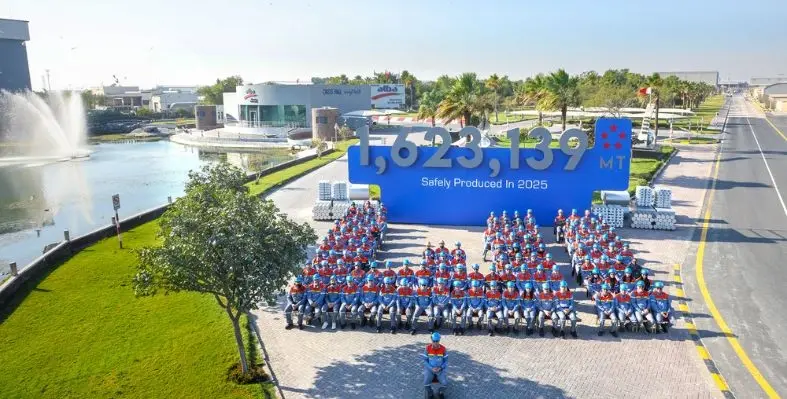
Aluminium Bahrain B.S.C. (Alba), the world’s largest aluminium smelter on a single site, achieved a record production of 1,623,139 metric tonnes in 2025, up from 1,622,261 metric tonnes in 2024, surpassing its annual target despite disruption caused by an industrial fire late in the year.
The milestone highlights the company’s operational resilience, disciplined execution and focus on sustainable growth.
Alba also closed 2025 with more than 42 million work hours without a Lost Time Injury (LTI), marking two consecutive years of LTI-free operations for the first time in its five-decade history.
Chief executive officer Ali Al Baqali praised employees and contractors for their commitment and performance. He added that Alba will continue to strengthen its operations through in-house initiatives aimed at delivering sustained improvements in production efficiency and throughput.
“This record is more than a production figure; it reflects our ability to overcome adversity and set new benchmarks in both operational performance and safety. We’ll build on this success, push our performance further, and continue to unlock the full potential of our people and operations.
I’m also proud and grateful to everyone who contributed to making 2025 a truly historic year for Alba.”