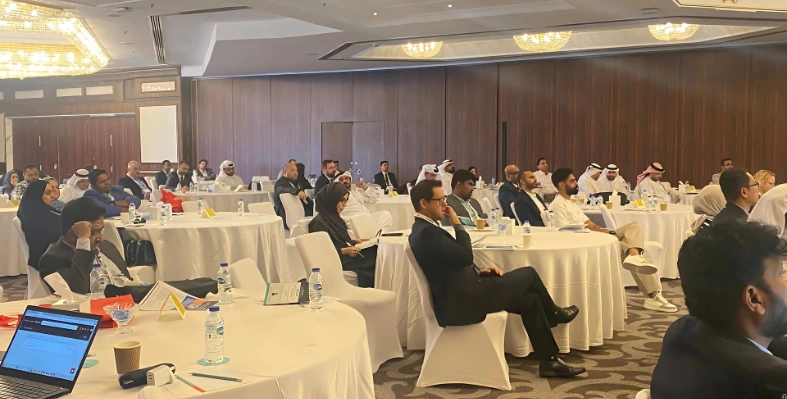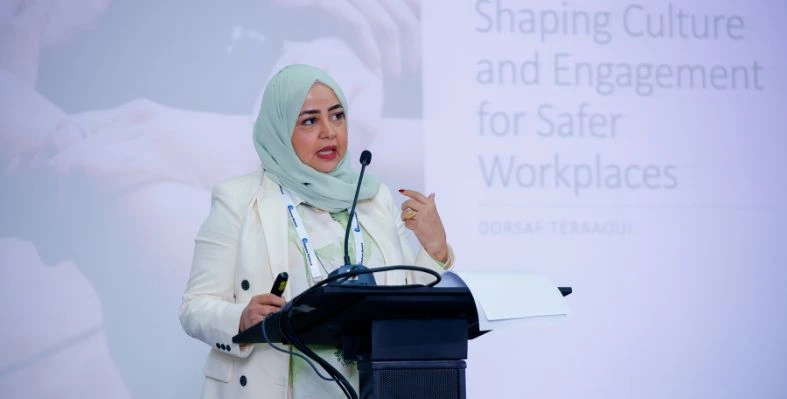
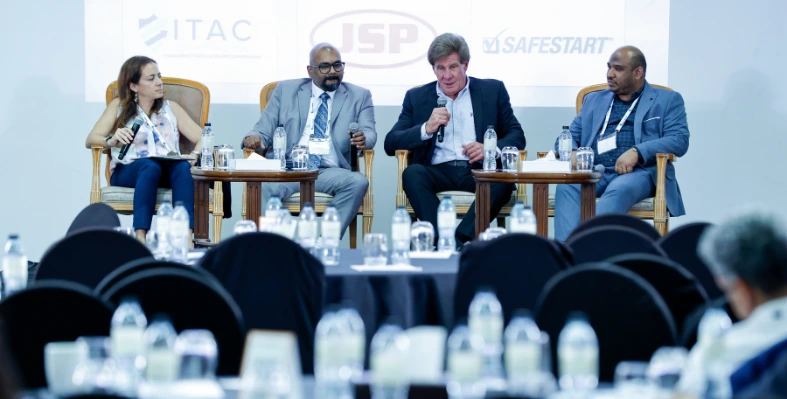
At the HSE MENA 2025 conference, an illuminating panel session brought together distinguished leaders: Larry Wilson (CEO and author of Safe Start), Binu Kalarickan (Director of Permits & Regulations | Permits & Regulations, Government of Ras al Khaimah), Suresh Kumar (CEO, ITAC Safety and Environmental Consultants), and Lara El Saad (Director, Subscribers Development, MENA, Benchmark Gensuite®), to discuss the impact of emerging technologies on Health, Safety, and Environment (HSE) practice.
Lara El Saad opened the discussion by emphasising the importance of approaching technological change in HSE with open minds. She noted that technologies such as artificial intelligence (AI), the Internet of Things (IoT), and predictive analytics are pivotal in moving organisations from reactive to predictive safety management. However, she acknowledged initial fears around privacy and control, urging the audience to focus on the core objective: “to reduce workplace injuries and ensure everyone goes home safely.” This, she asserted, remains the heart of predictive analytics, harnessing data not for surveillance, but for safeguarding lives.
Suresh Kumar highlighted the rapid progression of these technologies within HSE. He observed how organisations increasingly adopt AI and IoT for training, monitoring, and hazard detection, though many still face challenges integrating platforms and ensuring data quality. Suresh also referenced daily examples, such as the use of thermal imaging for hazard identification during the COVID-19 pandemic, and underscored the need for robust user training and awareness programmes to make technological adoption genuinely effective.
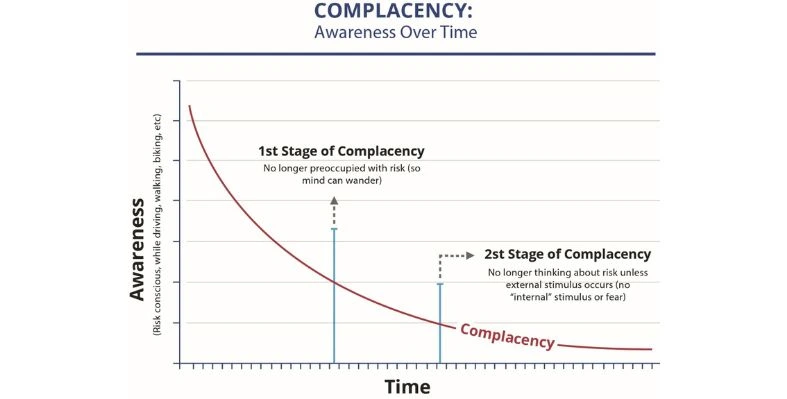
Binu Kalarickan addressed the practical challenges and the sociotechnical implications of emerging tools. He noted the expense and market concentration of advanced equipment such as drones, but also pointed out the essential role of reliable, tested technology—particularly in critical applications like emergency wearables. Binu candidly discussed the human adaptability dimension: while technology can enhance oversight, it must not supplant the human responsibility inherent in safety roles, nor should it create complacency.
Larry Wilson brought a pragmatic perspective. He warned that the rush to deploy new technologies can lead to employee apprehension and misuse if organisations neglect piloting, proper training, and honest communication. Drawing from both theory and personal experience, Larry urged for small-scale pilots to “get the kinks out” before wide implementation. He also reminded the audience that technology should amplify, not replace, human judgement and vigilance—a sentiment echoed throughout the session.
In summary, the panel at HSE MENA 2025 agreed: while AI, IoT, wearables, and other advanced technologies hold immense promise, their success relies on planning, pilot testing, education, and, above all, a retained focus on the human element in safety culture.