

Shaikh Khalid bin Abdullah, Bahrain's Deputy Prime Minister, inaugurated the 400 kV Al Jasra power station on behalf of His Royal Highness Prince Salman bin Hamad Al Khalifa, the Crown Prince and Prime Minister. The facility represents the largest electricity transmission station in the Kingdom
The Deputy Prime Minister conveyed his congratulations to His Majesty the King and to His Royal Highness the Crown Prince and Prime Minister on the successful completion of this strategic national infrastructure project, which contributes to Bahrain’s long-term development and energy security objectives.
He stated that the commissioning of Al Jasra power station marks a significant milestone in the evolution of the national electricity transmission network, which dates back to 1930 when Manama became the first capital in the Gulf region to be electrified. This continuous development, initiated during the era of His Highness Isa Al Kabeer, reflects a sustained commitment to institutional growth, infrastructure resilience, and service reliability.
Shaikh Khalid bin Abdullah emphasised that the project supports Bahrain's ongoing modernisation efforts, strengthening critical infrastructure while aligning with sustainable development and long-term planning frameworks.
He noted that the Al Jasra station plays a vital role in enhancing the stability, capacity, and operational reliability of the national electricity grid. The project supports increased urban development and investment activity, improves service quality, and ensures the safe and efficient management of current and future electricity demand.
The Deputy Prime Minister further highlighted that the project was delivered in accordance with international technical and safety standards, in collaboration with leading global companies. This reflects Bahrain’s strong capability in managing complex, high-risk energy infrastructure projects while maintaining stringent health, safety, and environmental requirements.
He commended the Electricity and Water Authority (EWA), led by its President Kamal bin Ahmed Mohammed, along with project teams and relevant stakeholders, for completing the project on schedule and to high technical standards, recognising the effectiveness of national expertise, inter-agency coordination, and robust project governance.
In his remarks, Kamal bin Ahmed Mohammed expressed his appreciation to Shaikh Khalid bin Abdullah for inaugurating the project and for the close oversight provided through the Ministerial Committee for Development and Infrastructure Projects, which ensured timely decision-making, effective risk mitigation, and the resolution of technical and logistical challenges.
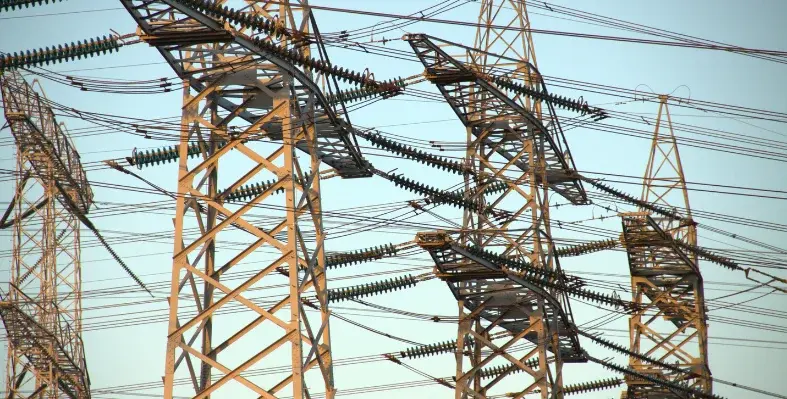
The EWA President explained that the project involved the construction of a 400/220 kV transmission station in Al Jasra, the installation of more than 120 km of 400 kV high-voltage cables and approximately 96 km of 220 kV cables, and their full integration into the national transmission network in accordance with international grid safety and performance requirements.
He added that the project upgraded the Gulf Cooperation Council (GCC) interconnection from 200 kV to 400 kV, increasing interconnection capacity from 926 MW to 1,359 MW, thereby improving cross-border energy exchange efficiency, system resilience, and regional grid stability.
The project also increased total transformer capacity from 975 MVA to 2,000 MVA, reducing electrical loading in the Riffa area by up to 25% and significantly enhancing the reliability, redundancy, and operational safety of the transmission network.
He concluded that the Al Jasra power station is among Bahrain’s most significant national energy infrastructure projects, delivered through integrated packages covering substations, switchgear, transformers, reactors, high-voltage cabling, consultancy services, and engineering supervision, in full alignment with international technical, safety, and environmental standards.