
The hours spent training production and maintenance teams can lead to variable results. They might just tick the boxes without providing a return on investment, or they can enhance safety, foster team building, and develop a deep understanding of the equipment that boosts efficiency and uptime.
In-class sessions should transition to on-site, hands-on training, supported by online content for access afterward. Training should be robust and encourage problem-solving using modern methods and standards. Companies that prioritise safety experience fewer safety incidents, less regulatory oversight, and higher productivity and profits.
When it comes to conveyor belts, a one-day training session can serve as a refresher, but it is recommended that staff complete a comprehensive course lasting at least two days. Conveyors are as complex as they are crucial to operations, and training should include a mix of classroom and hands-on learning, followed by a pilot programme to encourage team building and gauge results.
The problem
A commitment to safety starts at the top with corporate culture. A production-at-all-costs approach means safety concerns are always present. Bad habits and injuries often stem from three things: lack of funding, an understaffed maintenance department, and a run-till-broke mentality. Good safety habits require training and the patience for extra steps. Cutting corners and calling it efficiency can lead to serious injuries, low morale, downtime, and lost production.
Basic training
Everyone who operates, cleans, or maintains conveyors should be trained on the hazards of bulk material handling. Basic training helps staff identify problems and resolve them safely. Appropriate safety training emphasises a basic understanding of conveyor design and operation, as well as the Lock-Out Tag-Out (LOTO) procedures required for working on and around the system.
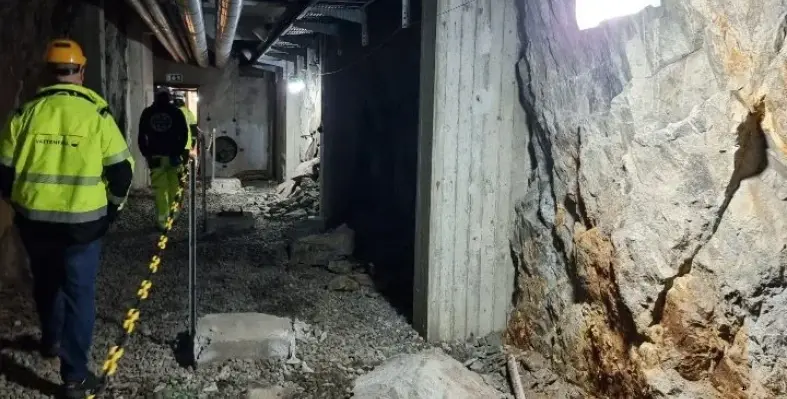
Conveyor maintenance can be dangerous even when LOTO and other safety measures are in place.
Advanced training
Over time, production demands cause conveyor belt speed and capacity to reach beyond the original design specifications. Systems are incrementally modified to minimise problems associated with the demands. Advanced conveyor design training for engineers and mechanics is critical for diagnosis and the development of updated solutions. No two conveyors are identical, so adhering to standard design methods allows a technician to make adjustments that another can recognise and understand.
Day one
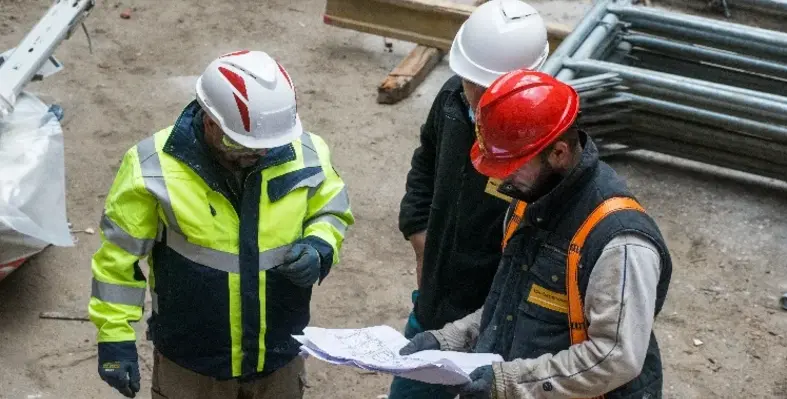
A walk down problem belts before the training helps the instructor focus on site-specific problems and management expectations. The first day starts in the classroom with the class reviewing typical problems, discussing challenges, and the best practices of safely addressing them. The class identifies a couple of problem conveyors and splits into small teams. Each team examines the same problem and brainstorms solutions.
Advanced conveyor training highlights the relationship between equipment, efficiency, and safety.
Day two
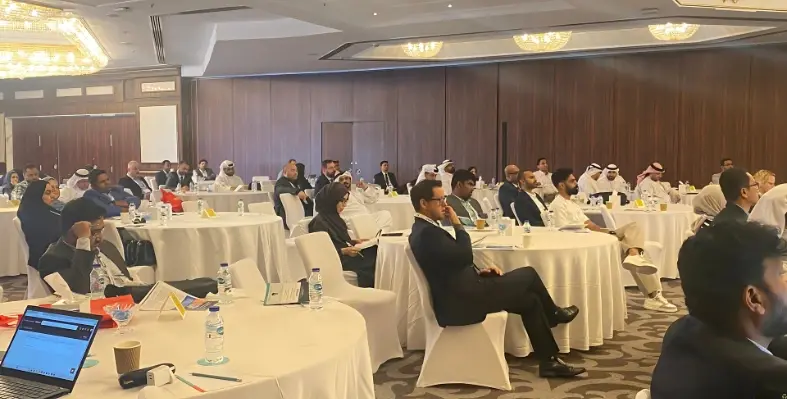
The class reviews and discusses root causes, solutions, and procedures. Once the teams reach an agreement, they prepare a short presentation using the knowledge they gained. The presentations may also include an estimate of the cost of the proposed solutions. Management is then invited to listen to the team presentations, ask questions, and show a commitment to safety and communication. By making the presentations, trainees display knowledge and support for the solutions. It is critical at this step that the managers who attend the presentations have the authority to act on the proposals and are willing to commit to a pilot programme to demonstrate that theoretical results can be translated into reality.
A conveyor system with safety engineered into the design maximises efficiency and productivity.
Pilot programme
One or more conveyors from the presentation are selected for a pilot programme. Usually, the results of the pilot programme are immediately noticeable. A lapse in maintenance affects the pilot results, so extend the test period to the next scheduled shutdown, with periodic inspections and adjustments made by the equipment manufacturer.
Third-party inspection ensures the integrity of pilot results.
It is incumbent upon management to take safety and maintenance training as seriously as the staff, listen to employees' concerns, and fix the problem correctly the first time. As research has shown, companies that prioritise safety, training, and updating equipment enjoy fewer safety incidents, less regulatory oversight, higher productivity, and greater long-term profits.
The online Martin Foundations Learning Center draws on the collective knowledge and expertise gathered over more than 80 years of solving bulk-handling challenges. Aimed at apprentice technicians and experienced engineers alike, the non-commercial information is offered at no charge and is accessible by computer, tablet, or smartphone. An extension of the Foundations training curriculum, the Learning Center uses a mix of text, photos, videos, webinars, online events, and live experts available to answer questions.
This article was written by R. Todd Swinderman, President Emeritus at Martin Engineering.