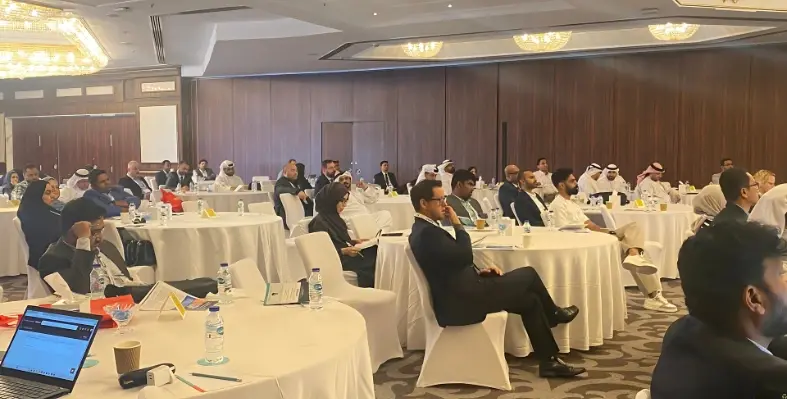

In a recent presentation during the HSE MENA 2025 conference, Chandan Tiwari from Benchmark Gensuite offered an insightful exploration of how artificial intelligence (AI) can transform the analysis and management of compliance-related documentation, especially for tasks like permit reviews.
Chandan began by contextualising the practical challenges organisations face when dealing with complex legal and best-practice obligations embedded within official documents.
To address this, he introduced an AI-powered workflow, which begins with analyzing permits or documents to identify their category and extract distinct operational or regulatory conditions.
Chandan’s demonstration centered around the Compliance Calendar, a tool designed to deconstruct documents into actionable requirements. The system automatically compiles these requirements into specific tasks, assigns them to relevant individuals across the organisation, and enables ongoing communication through integrated email notifications. This process ensures clear responsibility, enhances accountability, and allows organisational leaders to track the status of ongoing and completed tasks in real-time.
Recognising that change management and technology adoption carry risks, Chandan addressed common concerns voiced by stakeholders. For instance, he referenced feedback from a large oil and gas company about potential risks of de-skilling employees if AI tools are relied on too heavily, particularly when drafting responses or managing critical compliance outcomes.
Chandan acknowledged these apprehensions, emphasising the need for organisations to strike a balance, leveraging AI for tasks that surpass human capacity, such as sifting through hundreds of thousands of incident records, while still valuing human expertise and oversight.
Chandan further reassured attendees about the ethical and secure use of AI. He explained that the solution can operate not only in publicly available domains but also in “controlled, isolated” environments, ensuring that sensitive data remains protected. In response to questions about privacy, Chandan clarified that robust safeguards like automated facial blurring are implemented to prevent unauthorised identification.
This attention to privacy extends to the data itself; only anonymised records, regulatory incident reports, or customer-donated data with explicit consent are used in aggregate analyses. All organisational data remains encrypted and inaccessible to outsiders or even other entities within the same organisation.
Chandan concluded by inviting interested participants to visit the Benchmark Gen Suite booth to discuss the wide range of AI-powered compliance workflows and industry use cases available.
Through his presentation, Chandan highlighted the potential for AI to deliver both enhanced efficiency and stronger data governance, provided its implementation is guided by best practices in privacy, transparency, and human oversight.