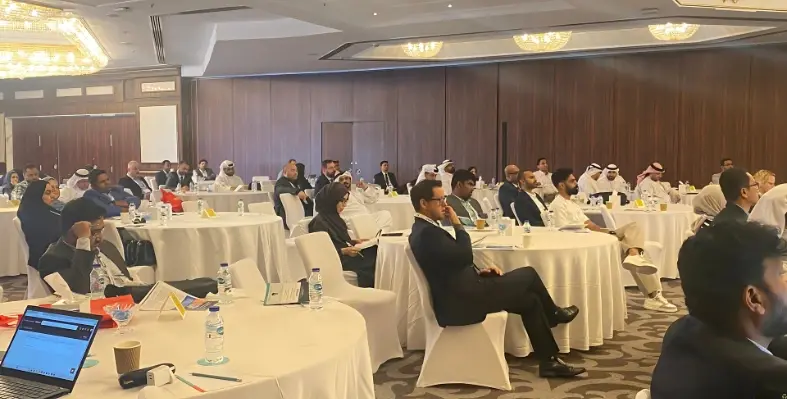

 The third Global Labour Market Conference in Riyadh, Saudi Arabia took place recently with numerous agreements signed.
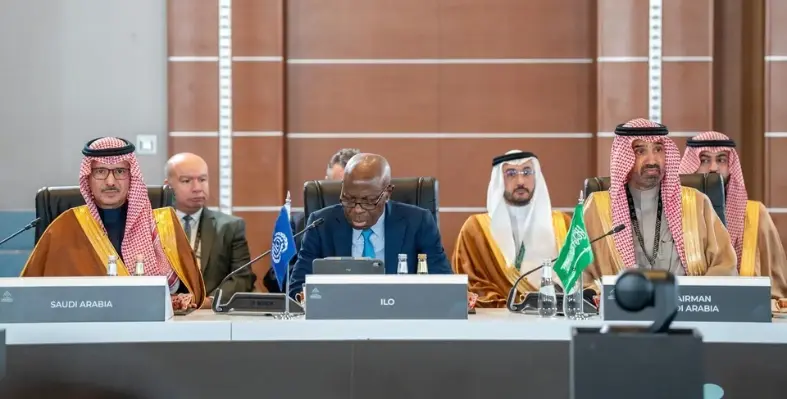
Organised by the Ministry of Human Resources and Social Development at the King Abdulaziz International Conference Centre, the event highlighted global cooperation to address evolving labour market challenges, attracting broad international participation, including more than 40 labour ministers, senior officials, experts and academics.
Over 45 memoranda of understanding and agreements were signed on the first daly alone to create thousands of training and employment opportunities in Saudi Arabia and participating countries.
These agreements focused on expanding flexible and digital work models, developing national skills through partnerships with specialised academies, adopting advanced technologies and artificial intelligence in recruitment and training, and strengthening sectoral collaboration with entities such as the Ministry of Sports and the General Entertainment Authority.
Institutional cooperation was also reinforced through knowledge-sharing agreements to enhance operational efficiency and sustainable labour market systems.
A high-level ministerial meeting, chaired by Saudi’s Minister of Human Resources and Social Development, Ahmed bin Suleiman Al-Rajhi, resulted in agreement on six key measures: improving skill recognition and portability, ensuring responsible AI use, adapting social protection to support mobility, leveraging data to connect skills with jobs, strengthening workforce planning against disruptions, and improving pathways to first employment and labor market re-entry.
Ministerial sessions also emphasised high-impact sectors as drivers of job creation. Tourism, contributing about 10% of global GDP and supporting nearly 370 million jobs, was flagged as a major opportunity sector under Vision 2030. Industry, mining, and manufacturing were also discussed as critical to competitiveness and sustainable growth.
Further dialogue sessions addressed trade transformations, skills mismatches, and AI’s impact on work, as well as informal economies, workforce resilience, and inclusive labour market progress.