Industrial facilities like manufacturing plants, factories and refineries are critical to the global economy, with U.S. manufacturing alone accounting for US$2.95 trillion in economic output and around 13 million jobs, making the manufacturing sector one America’s 5 largest employers.
However, with a reliance on heavy machinery and hazardous materials to complete essential tasks can come increased risks of workplace injuries. In fact, construction, manufacturing and warehousing facilities are ranked among the top 5 most dangerous workplaces by injury rate.
To reliably safeguard workers against complex risks, facility operators leverage a variety of smart technologies designed to proactively identify, warn of and address workplace hazards. Below, we explore the core elements of modern safety systems for high-risk industrial sites.
Modern industrial facility operators utilise a variety of intelligent, remote-access, automated technologies to protect workers against hazards and enhance security responses. By limiting the need for humans to come into contact with hazardous materials and unsafe locations, site operators can facilitate much safer, more secure and more productive industrial environments.
1. AI-enabled hazard detection
AI security cameras installed to cover high-risk areas like production lines, chemical storage rooms and machinery operating zones leverage powerful analytics software to identify and address site-specific safety hazards. Smart cameras can autonomously identify stimuli like anomalous motion and equipment misuse, then send real-time, data-rich alerts to operators.
Some AI-powered security cameras leverage machine learning algorithms to gradually learn expected conditions in complex environments. In practice, systems can be programmed to instantly address all anomalous activities ranging from suspicious motion at unusual times to unauthorised asset handling, enabling operators to proactively address site-specific hazards.
2. Smart Personal Protective Equipment (PPE) monitoring
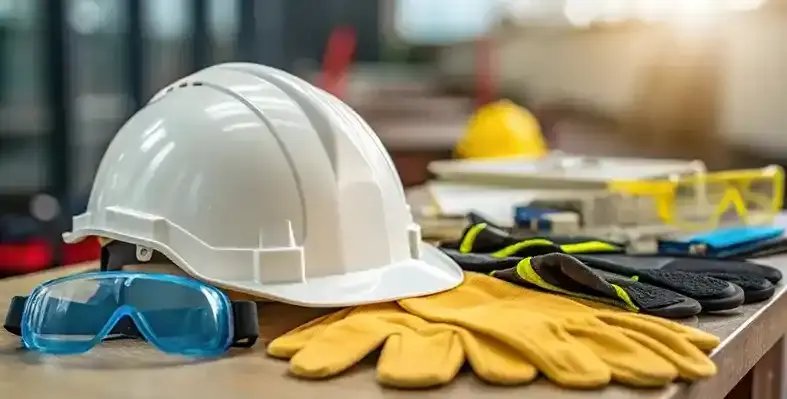
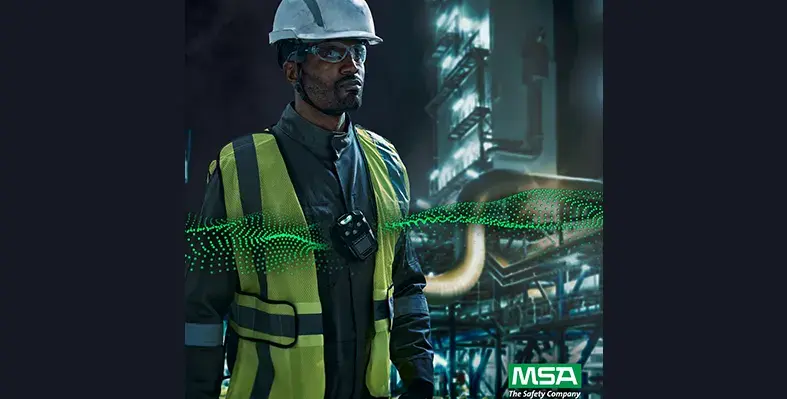
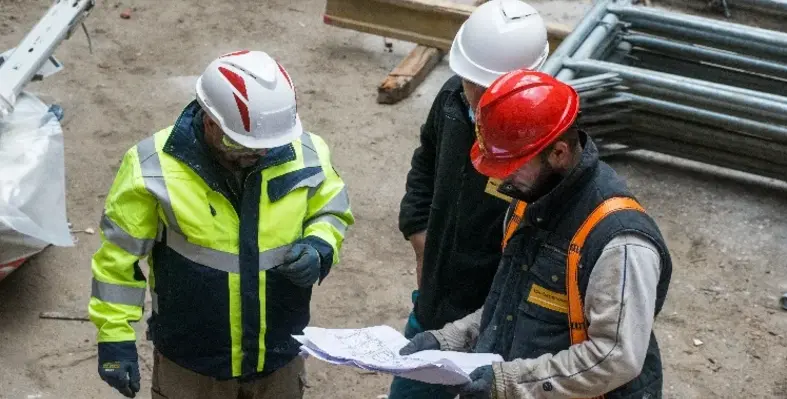
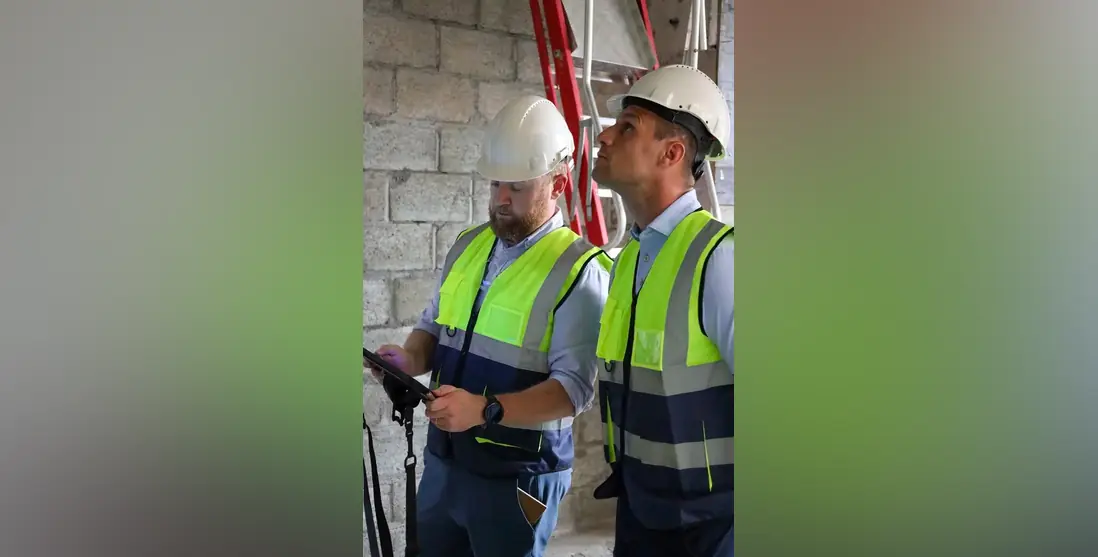
Video security cameras equipped with AI analytics software are also used to ensure PPE is used correctly. Cameras continuously observe jobsites to ensure all workers are wearing the right gear and adhering to safety training standards; systems can autonomously detect items like helmets, high-visibility vests and harnesses worn by workers in high-risk industrial areas.
In the event that a person is identified without appropriate PPE in a high-risk zone, cameras will instantly alert operators and engage wider responses. Through integrations with wider devices, insights from PPE monitoring systems can be used to automatically engage audible alarms and shut down dangerous machines to help safeguard employees against accidents.
3. Analytics-informed predictive maintenance
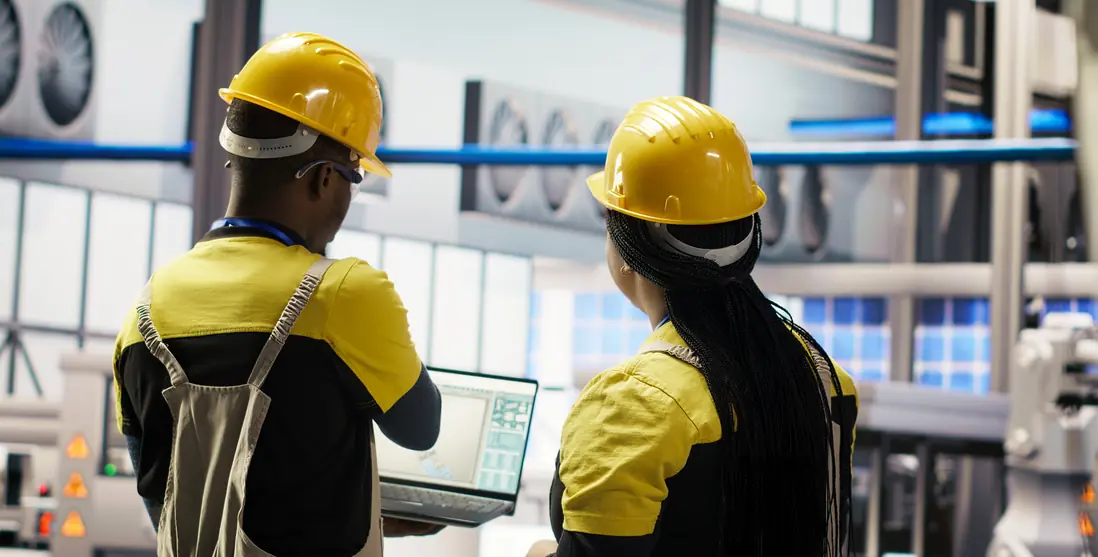
Analytics data collected by intelligent cameras and IoT sensors is used to schedule proactive maintenance for dangerous machinery. Systems continuously monitor machines for signs of damage, wear or failure and provide leaders with reports used to inform ongoing maintenance.
Networks of integrated cameras and sensors are trained to identify warning signs like excess heat, anomalous sounds and worn down components. In the event that hazards emerge or a machine has not been inspected for some time, maintenance will automatically be scheduled.
4. Unmanned autonomous vehicle-led workflows
Unmanned autonomous vehicles like aerial drones and Automated Guided Vehicles (AGVs) are leveraged by facility operators to minimise human contact with hazardous environments. These machines can be deployed to perform site surveys, inspect dangerous equipment and observe high-risk tasks without exposing humans to danger in order to improve on-site safety.
Drone and AGV-led workflows are also often enhanced via integrated networks of Internet of Things (IoT)-enabled sensors. Sound, pressure, air quality and heat sensors continuously monitor hazardous environments in search of harmful conditions that may pose a risk to staff; if hazardous stimuli are identified, workers are evacuated and AGVs are deployed to investigate.
5. Integrated industrial security systems
Key components of industrial safety solutions like AI-powered cameras, IoT sensors, access systems and alarms will be linked to form integrated security systems. In practice, leaders can use data from one device to inform the operation of another and trigger intelligent automations.
Integrated systems are used to automatically address wide-ranging hazards such as chemical spills, contact injuries and intrusion events, with devices programmed to automatically engage in response to specific risks and site operators able to access data feeds remotely at all times.
Conclusion
Smart technologies and autonomous workflows help to protect workers from common hazards in high-risk industrial sites and promote a strong safety culture among staff. As safety systems grow smarter, sites can become less hazardous and operators can lose less time to accidents.