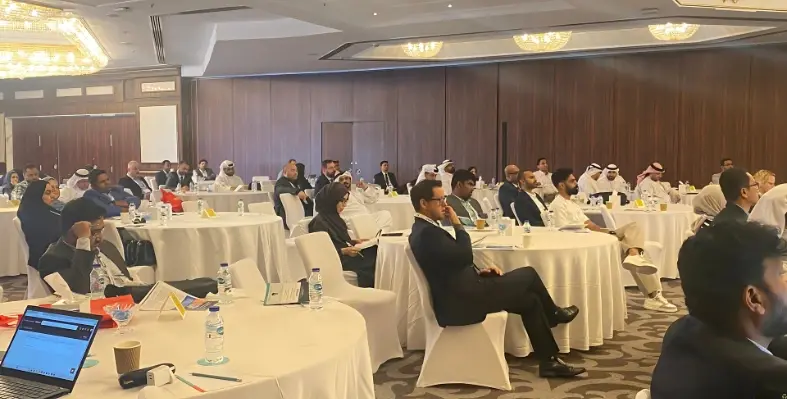


The International Labour Organization (ILO) and the European Union have concluded a two-day regional capacity-building workshop in Amman, Jordan, focused on measuring and utilising the NEET indicator to support evidence-based youth policies across the Middle East and North Africa (MENA) region.
The event, held on 10-11 February 2026, brought together representatives from national statistical offices, ministries of labour, and employers’ and workers’ organisations from Morocco, Algeria, Egypt, Tunisia, Libya, Lebanon, Jordan, and Palestine.
Participants discussed improvements in the measurement, interpretation, and policy application of the Youth NEET (Not in Employment, Education or Training) indicator – a critical labour market tool for identifying vulnerable young people aged 15-29 outside work, education, or training.
In 2023, nearly one in three young people in MENA were classified as NEET, with rates surpassing 40% among young women in several countries. Despite its global recognition, challenges persist in definitions, data comparability, and translating statistics into effective youth employment policies.
The workshop was organised under the EU-funded ILO regional Youth NEET (Y-NEET) project, which seeks to enhance the labour market integration of NEET youth by strengthening policies, institutions, and service delivery systems over three years.
Ms Carmen Voigt from the European Union Delegation in Jordan delivered opening remarks, stating, “We are pleased to cooperate with the ILO on the regional Youth NEETs initiative and are particularly encouraged by the progress in Jordan, where the project has developed comprehensive youth NEET profiles that have been formally adopted by the Ministry of Labour.”
Ms Lara Tamimi from the Jordanian Ministry of Labour highlighted Jordan’s leadership, noting, “Hosting this regional workshop reflects Jordan’s strong commitment to advancing evidence-based youth policies. We are proud that Jordan is the first country in the region to produce a comprehensive NEET statistical profile. This was not simply a compilation of figures, but a strategic step to better understand the realities facing our youth and identify the barriers preventing their integration into employment, education or training.”
The programme combined hands-on training on calculating NEET rates from labour force survey data with policy-oriented sessions on applying evidence to target employment services, active labour market programmes, skills development, and inter-institutional coordination. ILO labour statisticians and employment policy experts jointly facilitated the sessions.
By the workshop’s end, participants achieved a shared understanding of the NEET indicator aligned with international standards, strengthened their analytical skills on youth NEET trends, and improved their capacity to inform national policy design, coordination, and monitoring.A follow-up process will include online mentoring and regional comparative analysis to maintain collaboration between data producers and policymakers.
The Y-NEET project continues to promote practical use of NEET data for designing and monitoring integrated youth employment and activation policies, including approaches similar to the Youth Guarantee.