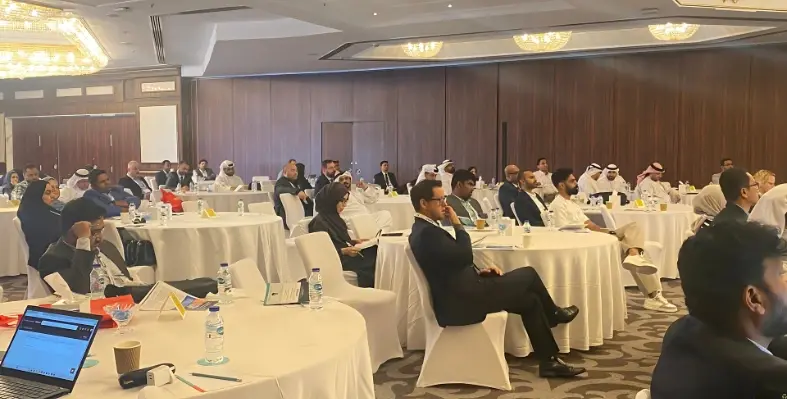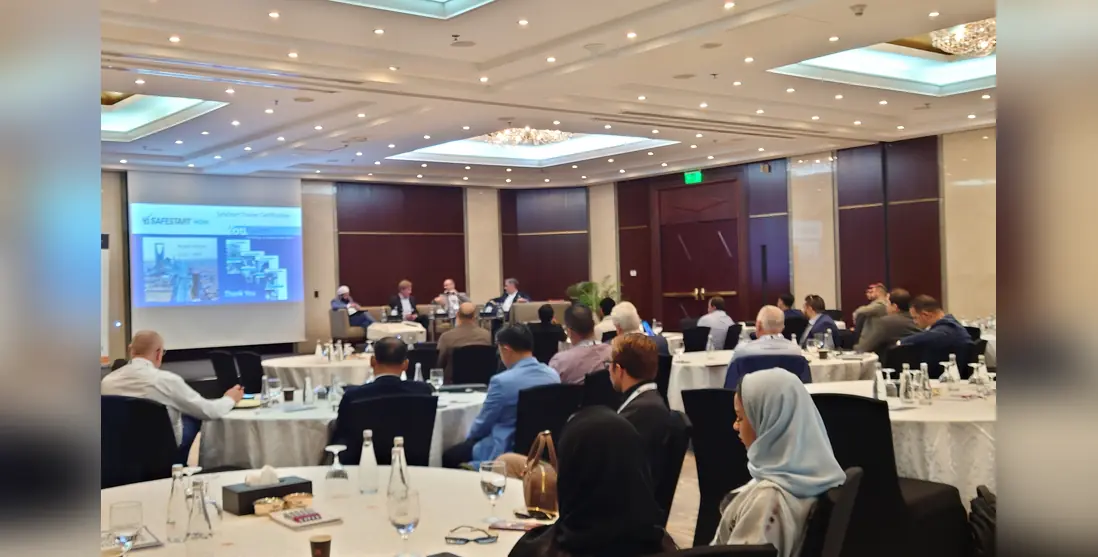
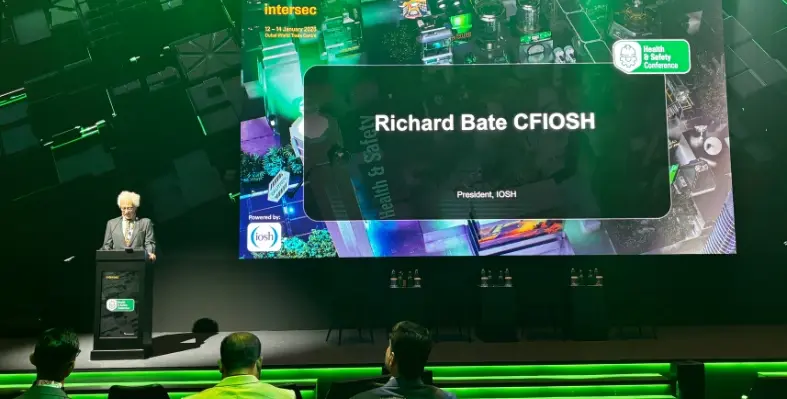
Richard Bate, President of the Institution of Occupational Safety and Health (IOSH), opened Intersec 2026 with a rousing keynote that spotlighted both the long-standing legacy and the evolving challenges of workplace safety in a turbulent world.
Addressing delegates from around the globe, Bate traced the remarkable growth of IOSH since its founding in 1945 to its current status as the world’s largest professional health and safety membership body. “We now have more than 50,000 members in 130 countries. We’re safety professionals, health practitioners, risk managers, educators and advocates united by a common purpose,” Bate proclaimed, signalling the breadth and unity of the profession.
Bate did not shy away from sobering statistics, noting that nearly 3 million workers die each year globally from occupational accidents and work-related diseases, according to the International Labour Organization. He pointed out that “behind each statistic is family, a community, and that impact ripples outwards”, demonstrating the far-reaching consequences of lapses in occupational safety and health (OSH).
Much of Bate’s address looked forward, urging OSH professionals to adapt to forces rapidly reshaping the world of work.
He highlighted the accelerating influence of artificial intelligence and automation, referencing predictions that up to 81% of tasks may soon be automatable, and he drew attention to mounting climate-related risks, “100,000 heat-related deaths per year are now caused by climate change,” he noted, emphasising the expanding remit of OSH professionals into environmental sustainability and resilience.
Bate called for more than just good intentions, insisting on a “global shift in how we approach harm reduction”. He underscored that robust safety cultures are not merely a compliance obligation, but both a moral imperative and business advantage, as companies investing in safety see reduced incidents, enhanced engagement and stronger reputations.
He concluded by challenging the profession not to rest on its laurels but to seize the moment for transformation: “What got us to where we are won’t get us to where we need to be in the future.” As digital risks, climate hazards and evolving models of work intensify, Bate’s vision is clear—OSH professionals must lead the charge in safeguarding workers’ well-being, today and tomorrow.