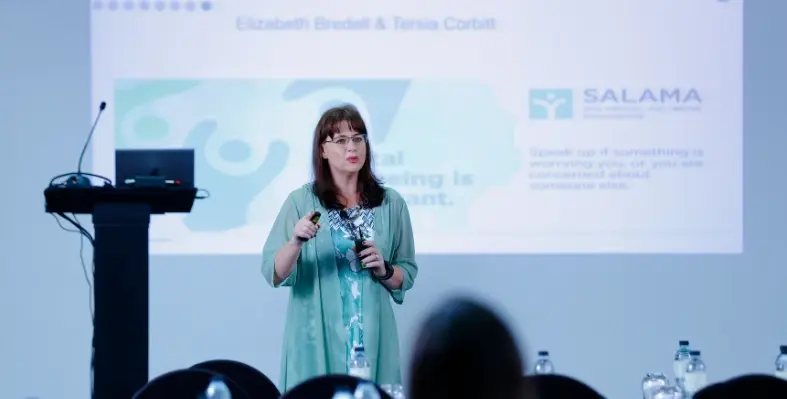
At Emirates Global Aluminium (EGA), occupational safety extends beyond operational protocols to a comprehensive commitment to mental wellbeing.
Under the leadership of Elizabeth Bredell and with the practical expertise of Tersia Corbett, the company has adopted a structured approach that demonstrates safety is as much about mental health as it is about the prevention of physical hazards.
EGA’s safety philosophy is shaped by Salama, its mental wellbeing programme. Managed within the safety department, rather than being limited to Human Resources, Salama is built upon proactive engagement, clear communication, and strong leadership involvement. What began as a campaign soon became a core cultural value, with the company reinforcing this through regular webinars, leader-led videos, and highly visible activities on site. By giving the initiative a name and promoting it openly, EGA has fostered genuine ownership and accountability at every level.
A key aspect of Salama is the presence of trained Mental Health First Aiders and mental health advocates throughout all operations. These individuals are not only prepared to provide support but also to recognise early signs of stress, particularly among those regularly exposed to high-risk working environments. EGA requires all safety superintendents and supervisors to complete Mental Health First Aid training, ensuring that a robust support system exists at every operational level. The initiative encourages open dialogue, reduces stigma, and empowers employees, including those who may be reluctant to come forward, to seek the help they need.
These efforts have yielded tangible results. Since Salama’s implementation, EGA has seen marked reductions in the Total Recordable Frequency Rate (TRFR) as well as lost time injuries, even as production demands have risen. The experience of the COVID-19 pandemic further demonstrated the importance of this approach, as increased leader visibility and direct engagement maintained both morale and safety performance during periods of heightened stress and fatigue.
Tersia Corbett highlighted the use of additional tools, such as the Flourish DX platform for surveying psychosocial risk, and described how data-driven interventions are designed to address issues within high-risk teams. EGA’s Employee Assistance Programme (EAP) and steady internal communication ensure that support remains accessible to all, including contractors.
Elizabeth’s experience following a serious workplace incident illustrated the significant legal responsibilities that safety professionals face. While she was confronted with the real possibility of imprisonment, the systems and training she helped establish provided not only protection for the workforce, but also critical accountability. In modern industry, occupational safety is closely linked to care for individuals, unwavering attention to risk, and a clear understanding of legal obligations.