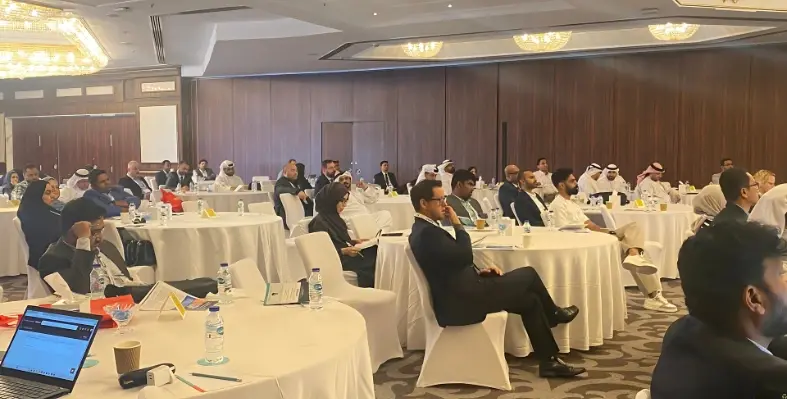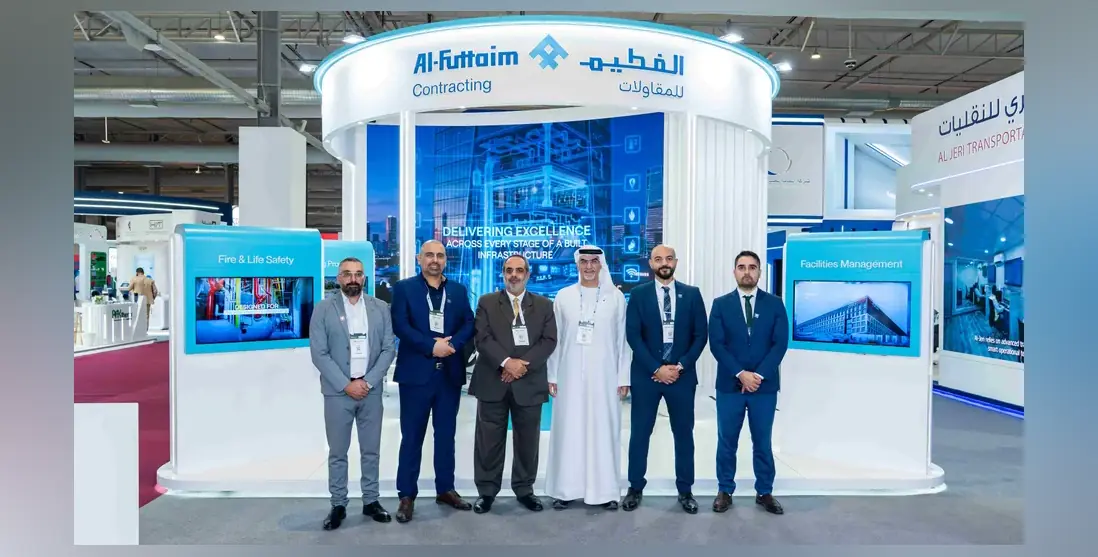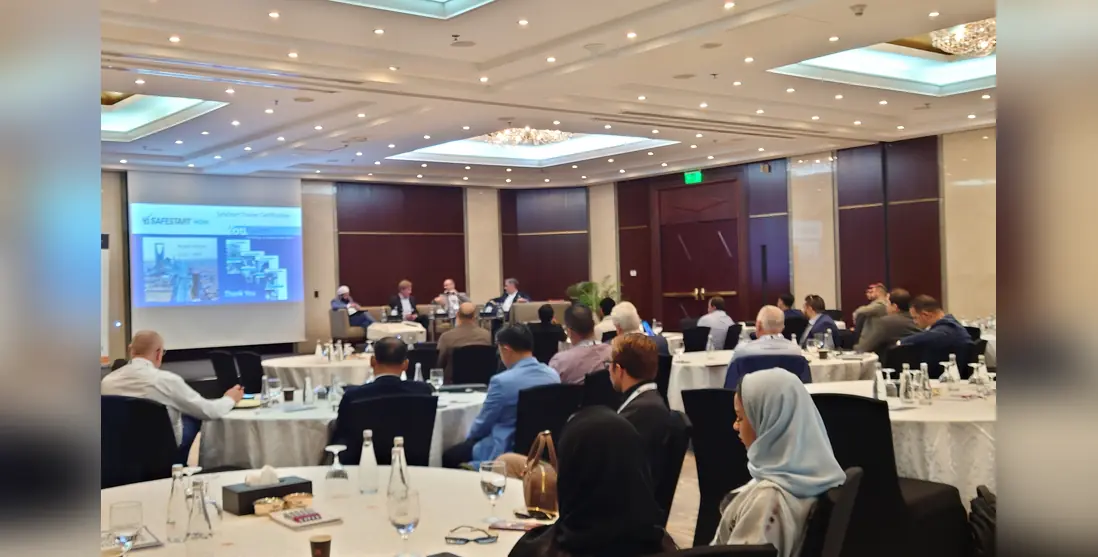
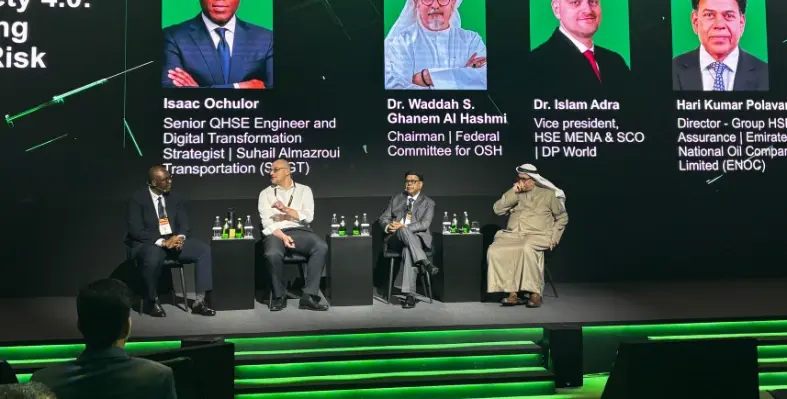
At Intersec 2026, a vital panel discussion on AI in safety and governance featured leading voices in engineering, safety, and digital transformation.
Moderated by Isaac Ochulor, Senior QHSSE Engineer and Digital Transformation Strategist, the panel brought together distinguished experts Dr. Waddah Ghanem, Dr. Islam Adra, and Hari Kumar Polavarapu to explore the rising impact of artificial intelligence on workplace safety, accountability, and organisational trust.
The session opened with Ochulor contextualising the meteoric rise of AI, noting, “What we started seeing in 2022…AI has completely been something that has touched base on every key dependency of businesses.” He emphasised AI’s rapid integration across sectors, referencing predictions that global AI spending would reach US$1.5 trillion.
Central to the conversation was the deployment of AI in high-risk environments, particularly oil and gas. Ochulor recounted real-world scenarios where AI successfully detected anomalies but raised a pivotal question: “When AI takes actions, who is responsible and who is accountable?” This query set the tone for deeper examination into responsibility frameworks.
Dr. Waddah Ghanem addressed the dilemmas faced by organisations, stressing, “We delegate responsibility, but we do not delegate accountability.” He clarified that employers and decision-makers ultimately bear responsibility for outcomes, regardless of how much autonomy is given to AI systems. “Anybody who engages in AI continues to carry the accountability,” Ghanem affirmed, even as AI takes on increasingly complex tasks.
The panel also delved into predictive analytics and risk management. Hari Kumar Polavarapu highlighted how AI-driven systems reduced manual inspections by 40% in some oil refineries, triggering discussions around the potential and limitations of predictive tools. However, he cautioned, “We are not there yet…We need to have certain checks and balances. Still, accountability has got to be defined clearly.”
Dr. Islam Adra shifted the conversation to trust and organisational culture, noting, “When you put trust and AI in the same sentence, it’s kind of an oxymoron.” He advocated for leadership transparency, worker involvement, and psychological safety as pillars for successful AI adoption. “Transparency can fill those gaps,” Adra said, emphasising the need for inclusive dialogue and clear communication around the rollout of AI.
As the discussion drew to a close, a live poll revealed persistent skepticism among the audience about fully entrusting critical safety functions to AI. The panel concluded that while AI is an indispensable tool, it cannot replace human accountability, judgement, or the ethical imperatives that underpin safe operations.
Through this candid, deeply insightful exchange, the Intersec 2026 panel underscored AI’s promise while reminding all stakeholders that technology, however advanced, is most effective when paired with responsible, transparent human leadership.